Managing a trust can feel straightforward on paper and tense in real life. One beneficiary wants a faster distribution, another wants a fuller accounting, and a trustee is left trying to keep the family calm while following Texas law. That mix is where litigation exposure starts, not in a courtroom, but in the ordinary decisions a fiduciary makes when emotions, money, and timing all collide.
For a Texas trustee, executor, or family member, the phrase and litigation exposure really means one thing, the practical risk that a disagreement can turn into a claim. The hard part is that the risk often grows before anyone files suit. A beneficiary's angry email, a delayed report, or a disputed distribution can all become the seed of a case if the trustee does not document the decision and communicate clearly.

What Litigation Exposure Really Means for a Texas Trustee
A trustee staring at a sharp email from a beneficiary is not looking at a lawsuit yet, but they are looking at exposure. In plain English, that means the situation has enough friction that someone could sue over it if the facts, the numbers, and the paper trail line up against the trustee. It is the gap between “we have a disagreement” and “we are now spending money on lawyers.”
The three ingredients that turn friction into a claim
A claim usually needs three things. First, a fiduciary decision. Second, an unhappy beneficiary. Third, a concrete loss, delay, or distribution dispute tied to that decision.
That is why a trustee's silence can be costly. If a beneficiary asks why a distribution was delayed and the trustee does not answer, the beneficiary may assume the worst. If the trust file has no notes, no explanation, and no accounting trail, the dispute gets easier to frame as wrongdoing instead of administration.
A useful way to think about exposure is this, the decision may have been honest, but if it cannot be explained, it can still be attacked. Texas families often expect trust work to be personal and informal. Texas trust law does not treat it that way. The Texas Trust Code and fiduciary principles expect loyalty, prudence, and recordkeeping, which means the trustee has to act like a professional even when the family conversation feels casual.
Practical rule: the earlier you write down the reason for a trust decision, the less room there is for a later claim to fill in the blanks.
For a reader looking for outside context, trust guidance from Parkview Partners can help illustrate how different trust structures create different administration duties. The key is that exposure is not a mystery category. It is the practical result of how a trustee handles notice, records, and judgment.
Common Causes of Trust Litigation in Texas
Many trust disputes in Texas fall into a few common categories, and these patterns are easier to identify than one might expect. Once you recognize the framework, you can often determine if a family matter is a straightforward inquiry or the beginning of a formal legal battle. A competent trustee does not need to anticipate every scenario, only to understand which category the specific circumstances fit into.
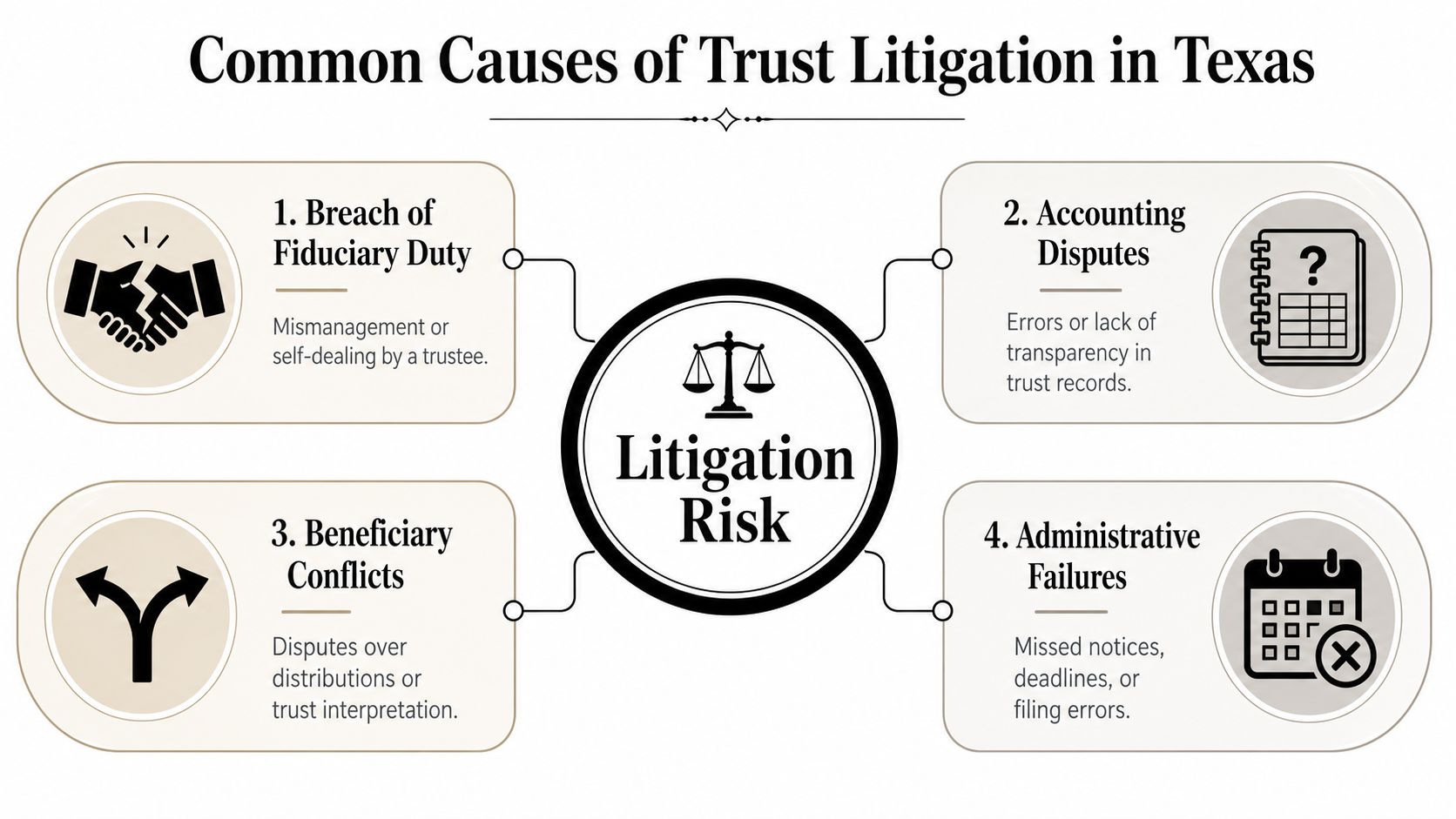
Breach of fiduciary duty, accounting disputes, and beneficiary conflict
Think of breach of fiduciary duty like a club treasurer spending the club's money on themselves. In trust terms, that can mean self-dealing, favoritism, or using trust assets for the trustee's own benefit. Texas fiduciary law is built to stop that kind of conduct, and even a well-meaning trustee can face scrutiny if they mix personal interests with trust business. A Texas example would be a trustee who sells trust land to a company they control without full disclosure or fair process.
Accounting disputes often start with a beneficiary who wants to see the numbers. That does not mean the trustee has done anything wrong. It means the trustee needs clean records that show receipts, distributions, expenses, and balances in a way a beneficiary can follow. If you need a formal accounting reference, A Trustee's Duty to Account to Beneficiaries addresses when and how a Texas trustee must provide one.
Beneficiary conflicts are usually about distributions or how the trust language should be read. One beneficiary thinks the trustee should act now, another thinks the trustee should wait, and the trustee is stuck between competing demands. A Texas example is a family trust where one child wants cash distributions for college expenses and another argues the trust should keep assets invested for the long term.
Tax controversies and creditor claims
Tax controversies tend to follow missed filings, incomplete reporting, or a misunderstanding about who owes what. The trust itself may not be the only target. Beneficiaries can be affected too if administration mistakes ripple into tax problems. A Texas trustee handling rental property, mineral interests, or business interests should keep tax planning tied to the administration calendar, not treated as an afterthought.
Creditor claims are the most straightforward to misunderstand. A trust is not a shield just because it is a trust. Creditors may still try to reach assets or challenge transfers, depending on the facts and the governing documents. If a family member thinks “the trust is off-limits,” that belief can create false comfort and delay a real response.
For a practical overview of organizing documents and decision points, organizing your estate affairs is a useful complement. The common thread across all four causes is simple, weak records and unclear communication make every category easier to attack.
For a related Texas resource, the issues discussed in this trustee breach of fiduciary duty guide line up closely with the factual patterns that usually trigger suit.
Texas Trust Code Rules That Shape Fiduciary Risk
The Texas Trust Code does not ask a trustee to be perfect. It asks a trustee to be loyal, careful, and transparent enough that beneficiaries can see the administration was handled in good faith. That matters because many disputes are really arguments about process, not just outcome.
Loyalty, prudence, and impartial treatment
A trustee should never treat trust property like a personal checking account. The duty of loyalty means decisions should be made for the trust and its beneficiaries, not for the trustee's side business, family member, or favorite beneficiary. If a trustee is considering lending trust money to their own company, that is the kind of decision that calls for a pause, documentation, and often legal review.
Prudent administration is the next layer. A trustee does not have to choose the safest possible move every time, but they do need a reasonable basis for the choice they make. In Texas, that means keeping notes about why a distribution, investment, sale, or delay was handled the way it was.
Impartiality also matters. A trustee with multiple beneficiaries cannot favor one branch of the family because that branch is louder or more cooperative. Even when beneficiaries have different needs, the trustee still has to justify decisions under the terms of the trust.
Records, claims, and the protection the law gives careful trustees
Recordkeeping is not busywork. It is the trustee's shield. Clean records support an accounting, support tax reporting, and support the explanation for every major action.
Texas law also gives careful trustees practical protections. Indemnification rights and fee-shifting rules can help a trustee recover costs when the trust documents or the law allow it, and bonding expectations can matter when a court wants added protection for the estate or trust. On the other side, beneficiary claims do not last forever, so timing matters. A beneficiary who waits too long may lose options, while a trustee who waits too long to seek advice can make a fixable issue harder to unwind.
A trustee who preserves the paper trail often has more room to resolve the dispute without turning every disagreement into a courtroom fight.
If the legal language feels abstract, Texas Trust Code trustee duties is the right anchor point for the day-to-day obligations that sit behind all of this. A Texas trust administration lawyer can spot the fiduciary trap before it becomes a formal claim, especially when the trust document is unclear or the family is already divided.
Smart Strategies to Reduce Litigation Exposure
A trustee usually gets in trouble long before anyone files a lawsuit. The risk starts with small administration choices, the timing of notices, the way records are kept, and whether family members feel left in the dark. Those early decisions often decide whether a trust runs smoothly or turns into a claim.
Build a prevention system, not a patchwork
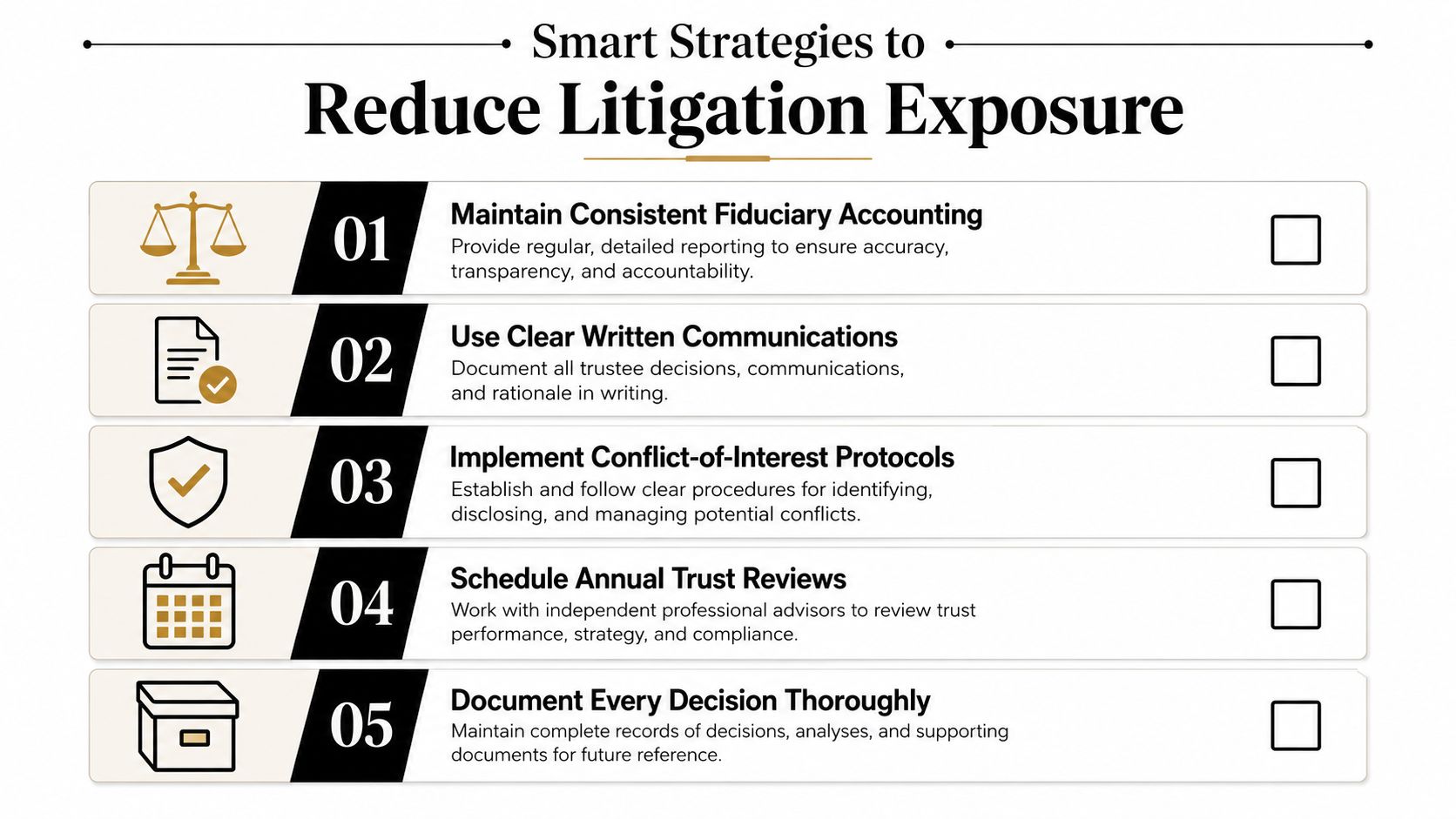
Start with regular fiduciary accounting. Beneficiaries do not need a lecture on spreadsheets, they need a clear picture of what came in, what went out, and why each decision was made. That is why a clear explanation of A Trustee's Duty to Account to Beneficiaries matters in practice, because consistent accounting habits often stop suspicion before it turns into a dispute.
Written communication belongs in the same system. A phone call may settle a question in the moment, but a follow-up email gives the trustee a record of the decision, the timing, and the reason it was handled that way. If a distribution is delayed, a written explanation helps show the trustee acted with care instead of guesswork.
Conflict-of-interest controls deserve the same attention. If the trustee has a personal interest in a decision, that issue should be identified before the action is taken, not after objections start. A successor trustee can also reduce risk when the acting trustee is overloaded, emotionally tied to the family, or too close to a disputed asset. In those situations, a second set of hands can keep the administration from looking like self-dealing.
Drafting choices, insurance, and review habits
Careful drafting can lower exposure before the trust is ever administered. Dispute-resolution clauses can steer a family toward mediation first, and in terrorem provisions can discourage weak challenges when they are used properly. A Texas estate planning attorney can build those terms into the trust so the document itself does part of the risk management.
Trustee liability insurance is another practical layer. It will not cure a poor decision, but it can soften the financial hit of a claim and make defense costs easier to manage. Annual review with counsel and tax advisors keeps the trust aligned with changing family facts and changing tax issues.
For related planning work, families often review estate planning, probate, guardianship, and asset protection services together because those choices affect how much pressure the trustee will face later. The same is true outside trust law. Even in the capital gains on gold guide, the paper trail often matters more than the story people remember.
| Strategy | Main Litigation Risk Addressed | Texas-Specific Note |
|---|---|---|
| Consistent fiduciary accounting | Accounting disputes and distrust | Keep records detailed enough for a formal review under Texas trust administration practice |
| Clear written communications | Misunderstandings and beneficiary conflict | Use writing to memorialize decisions and timing |
| Conflict-of-interest protocols | Breach of fiduciary duty | Flag any personal interest before acting |
| Annual trust reviews | Administrative drift and tax issues | Re-check the trust against current family facts and tax planning needs |
For readers comparing trust records with other financial paperwork, the contesting a trust after death in Texas timeline is a useful reminder that delay, confusion, and incomplete records can shape the dispute long before anyone steps into court.
A Realistic Timeline of a Texas Trust Dispute
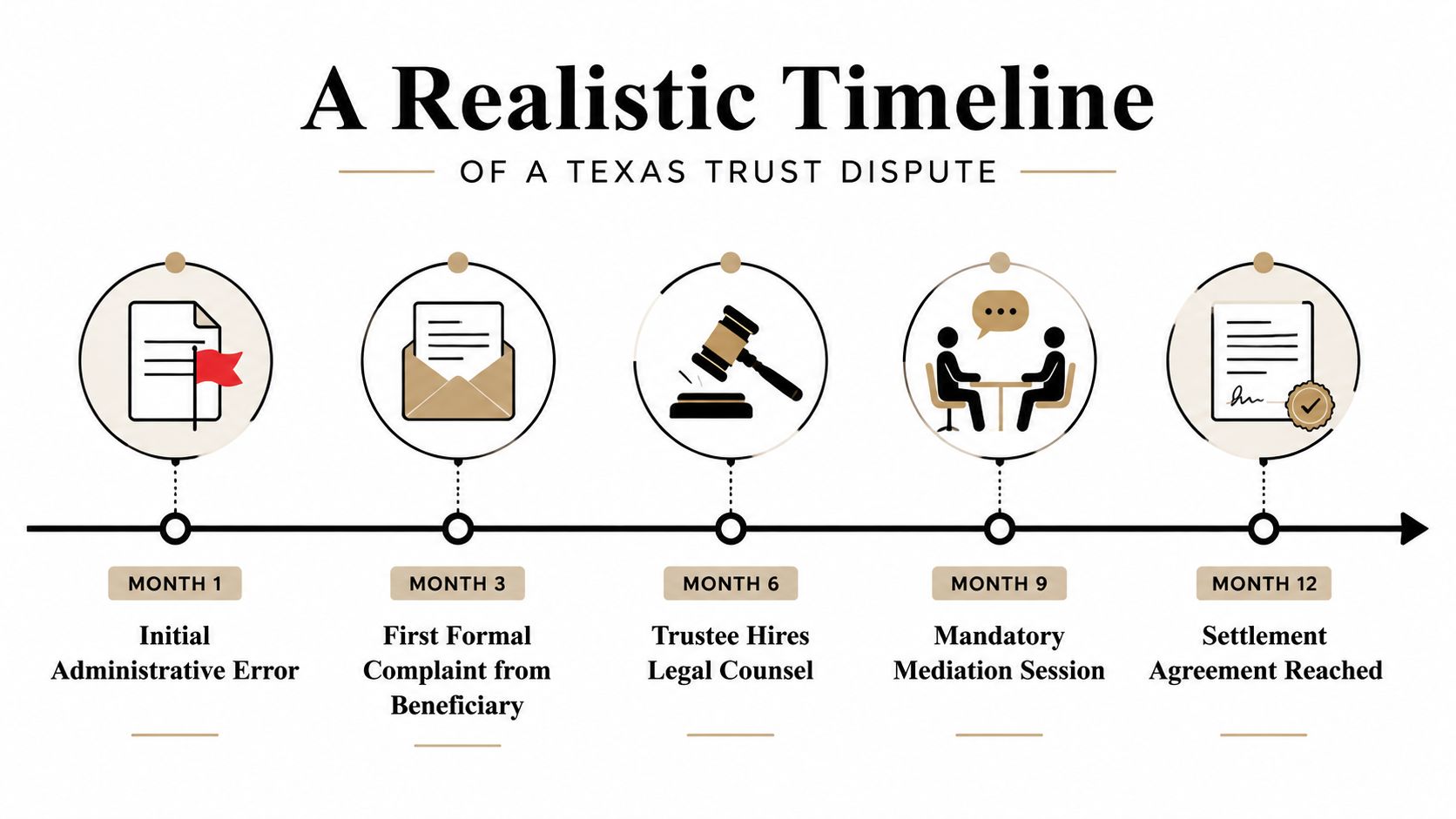
A trust dispute usually does not explode all at once. It grows in stages, and the earliest stages are the cheapest to fix. A trustee who notices the warning signs early can often keep a small administration issue from becoming a formal fight.
How small problems become legal pressure
Month one is often a simple administrative error, such as a delayed notice or a late accounting packet. The trustee may think the issue is minor. The beneficiary may think the trustee is hiding something. That difference in perception is where pressure starts.
By month three, the first formal complaint usually appears. It may be a written demand for records or a request to explain a distribution. If the trustee responds with facts, dates, and supporting documents, the conversation may stay informal.
Around month six, legal counsel often enters the picture. That does not mean trial is inevitable. It means the family has moved from frustration to strategy. Once counsel is involved, the quality of the trustee's records becomes much more important than the tone of anyone's emails.
A related Texas timeline resource, contesting a trust after death in Texas timeline, helps show how dispute timing can affect the options available to the family.
Why mediation often becomes the pressure valve
By month nine, many serious disputes are headed toward mediation. That is the point where a well-prepared trustee can benefit from clean records, clear explanations, and insurance support. The family may still be upset, but mediation gives everyone a chance to resolve the issue without the cost and strain of trial.
By month twelve, the dispute may settle if the trustee has acted consistently and the beneficiaries can see the facts. That is the main lesson of the timeline, early administration decisions are not minor. They shape how persuasive the trustee will look months later if the dispute is ever tested.
Clean records bought early often buy peace later.
Warning Signs Trustees Often Miss
The hardest warning signs are the quiet ones. A beneficiary who stops returning calls may not be indifferent, they may be gathering records. A beneficiary who suddenly asks for exact dates, balances, and transaction details may already be checking whether the trustee's story matches the paper trail.
A tax notice from the IRS is another signal that the administration file needs attention fast. So is a creditor inquiry, because outside claims often expose weak document control. A sudden demand for a full accounting usually means the beneficiary no longer trusts the informal explanation.
Family rumors matter more than most trustees want to admit. When one relative starts repeating that the trustee is “hiding something,” the trustee should assume the conversation has moved beyond casual concern. The right move is a calm response, not a defensive one.
- Quiet Beneficiary: Treat sudden silence as a possible escalation, not relief.
- Detailed Questions: Answer with documents, not memory.
- Tax or Creditor Notice: Pull the file together immediately and review deadlines.
- Accounting Demand: Prepare a formal response if the trust terms or Texas law require one.
- Family Rumor: Address the facts early before the story hardens.
A trustee does not need to panic over every question. The point is to notice when routine administration has stopped feeling routine. That is usually the first real sign that litigation exposure is increasing.
Your Next Steps and How the Law Office of Bryan Fagan, PLLC Can Help
If you are a trustee, your first three steps are simple. Gather the trust, gather every accounting and bank record, and write down the last major decision you made and why. If you are a beneficiary, your first three steps are just as practical. Save the emails, request the records in writing, and keep a timeline of what happened and when.
Before a consultation, bring the trust document, any amendments, recent statements, tax filings, beneficiary correspondence, and any court papers or demand letters. That gives a lawyer enough context to spot whether the issue is a notice problem, an accounting issue, a fiduciary concern, or a dispute that needs mediation. Early review is usually cheaper than trying to fix a file after the family has already dug in.
The Law Office of Bryan Fagan, PLLC helps with trust administration guidance, fiduciary accounting review, trustee defense, beneficiary representation, mediation, and trust modification or termination when needed. We also assist families with estate planning, probate, guardianship, and asset protection when those issues are part of the same situation. If you are unsure which path fits your facts, start with the documents and get legal advice before the disagreement gets louder.
If you're managing a trust or planning your estate, contact The Law Office of Bryan Fagan, PLLC for a free consultation. Our attorneys provide trusted, Texas-based guidance for every step of the process, including trust administration, fiduciary accounting, and dispute resolution. Visit Law Office of Bryan Fagan, PLLC to talk through your situation and get clear next steps.