Managing a loved one's trust can feel heavy, especially when the questions start small. A beneficiary notices missed calls, no accounting statement arrives, and then a distribution seems to vanish into a questionable expense. At that point, families often wonder whether they're dealing with a simple communication problem or a real fiduciary failure.
In Texas, that question matters because removal authority is not about hurt feelings or family tension alone. It's the legal power to ask a court, or in some situations a co-trustee or interested party, to step in when a trustee is no longer carrying out the job with the care, loyalty, and honesty the Texas Trust Code expects. When the trust belongs to a parent, spouse, or sibling, the law can feel personal fast, but the legal standard still stays tied to the trustee's conduct, not the family's frustration.
A lot of readers also get pulled into side issues that don't really answer the main question. If you're sorting through whether bad behavior rises to a legal problem, resources like is proof of infidelity legal can help separate gossip from proof, but they don't replace a trust-specific analysis. For Texas families, the better question is whether the trustee has crossed the line under fiduciary law and whether removal is the right remedy, or just the most dramatic one.
If you want a plain-English starting point on trustee abuse, this Texas trust administration resource is a useful companion read before taking the next step.
When Trust Concerns Arise in Your Family
A daughter checks the trust bank statement and sees transfers she can't explain. A son asks for an accounting and gets silence, then a short text saying everything is “handled.” Another family has a trustee who won't share records, won't return calls, and keeps saying the trust is “complicated,” which usually means the family is being asked to trust without being shown anything.
That's the moment many Texas families start asking whether removal authority might come into play. Under Texas trust and estate law, the issue usually isn't whether everyone likes the trustee. The question is whether the trustee has broken fiduciary duties, put trust property at risk, or become so conflicted or unfit that continued service harms the beneficiaries.
What removal authority means in plain English
A trustee holds other people's property, so the law treats that role with care. Under the Texas Trust Code, the trustee owes duties of loyalty, prudence, impartiality, recordkeeping, and communication, and those duties exist to protect the beneficiaries, not the trustee's comfort. If the trustee stops acting like a fiduciary and starts acting like an owner, that's when the law starts paying close attention.
Removal is not a casual family vote. It's a legal remedy that can be triggered by court action, and it's often discussed only after lesser steps have failed. In that way, it works much like other Texas fiduciary disputes, where courts want proof, not just suspicion.
A practical way to think about it is this, if the trustee's conduct threatens the trust, the beneficiaries may need to escalate. If the issue is mostly poor communication or hurt feelings, a removal fight may cost more than it fixes.
Practical rule: Before accusing a trustee of wrongdoing, separate the emotions from the facts. Ask what records exist, what the trust instrument requires, and whether the conduct actually harmed trust property or beneficiary rights.
For families comparing legal tools, Breach of Fiduciary Duty by a Texas Trustee is a useful reference because it focuses on what counts as a breach and what remedies beneficiaries may have. Texas families looking for a Texas trust administration lawyer should keep that distinction in mind, because not every bad decision is removal-worthy, but every serious breach deserves review.
Statutory Grounds for Trustee Removal in Texas
Texas does not leave trustee removal to guesswork. The Texas Trust Code and related estates law give courts specific reasons to remove a trustee, and those reasons are narrower than family conflict. A beneficiary usually has to show more than disappointment with performance, because a trustee can make an unliked decision without violating the law.

The grounds that matter most
The core grounds include a material breach of fiduciary duty, insolvency or unfitness, failure to account, conflict of interest, and conduct that endangers trust property. In plain terms, that covers self-dealing, ignoring recordkeeping duties, taking actions that threaten the trust's value, and serving in a way that makes responsible administration impossible.
A trustee who invests trust money in a way that benefits a relative, or who uses trust assets for personal expenses, is moving into self-dealing territory. A trustee who refuses to give annual accountings may be hiding poor administration or failing the duty to keep beneficiaries informed. A trustee who is incapacitated, financially unstable, or otherwise unable to perform can also become removable because the trust can't wait for the situation to improve on its own.
Texas courts do not remove trustees just because beneficiaries dislike the trustee's judgment. Investment decisions can be controversial, but disagreement alone is not enough. The core issue is whether the trustee acted prudently, loyally, and within the authority granted by the trust.
The evidentiary burden matters too. Courts take removal seriously, so the proof must be strong enough to show real misconduct or real risk, not just family resentment. That is why records, timelines, and communication logs matter so much in these cases.
If you want a deeper look at the type of misconduct that can support removal, the firm's Texas trustee fiduciary breach resource is a practical companion to the legal standard. Families also often benefit from the broader explanation in The Fiduciary Duties of a Texas Trustee, because loyalty, prudence, and impartiality are the foundation of everything that follows.
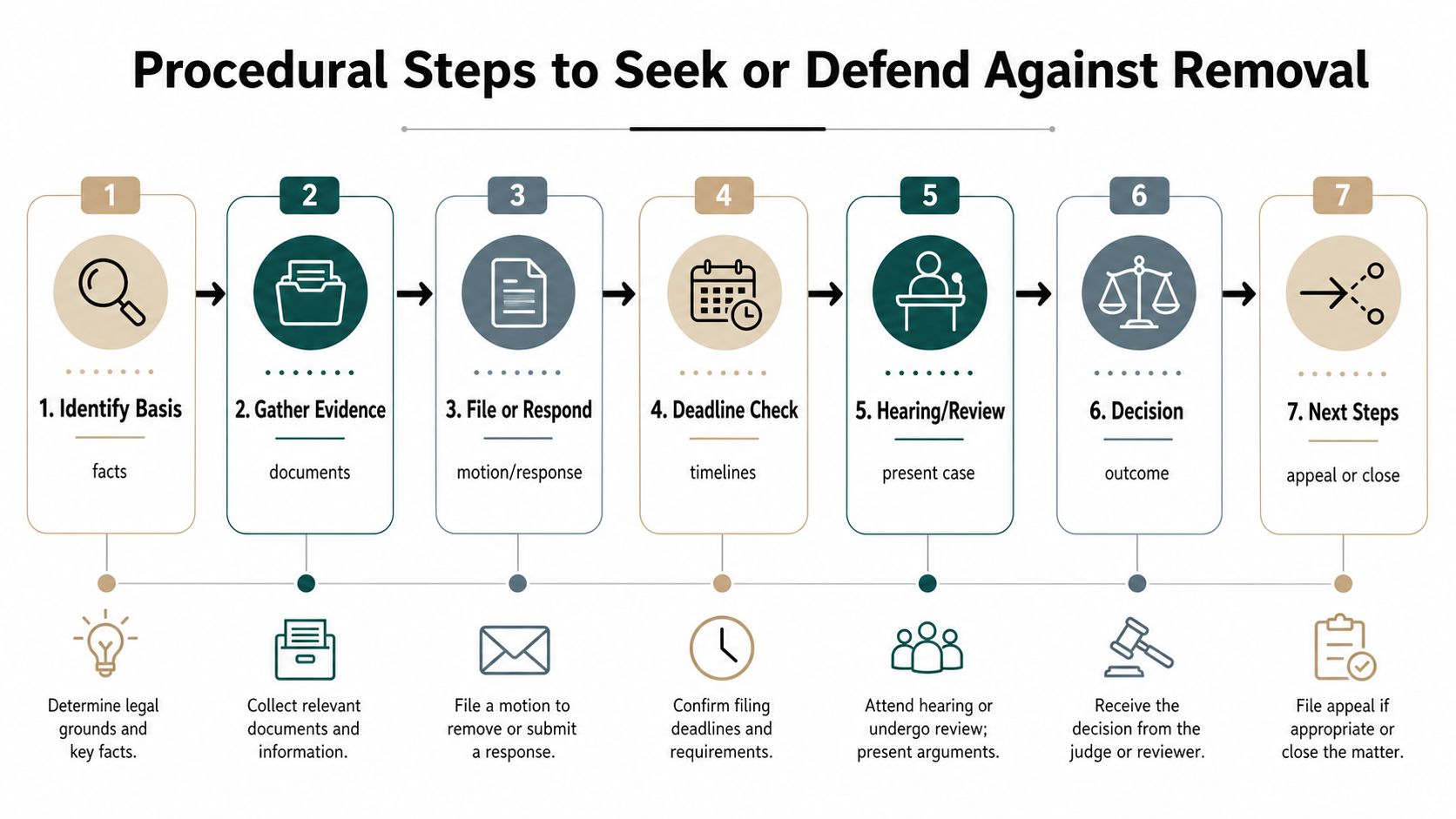
Procedural Steps to Seek or Defend Against Removal
A removal case usually starts with a petition in the proper probate or district court, depending on the trust and the county setting. After that, notice has to go to interested parties, because trust disputes are not handled in secret. Once the case is filed, the fight turns on evidence, deadlines, and whether the trustee can explain the conduct in a way that satisfies the court.
What both sides need to gather
The most useful records usually include:
- Bank statements and ledgers: These show where trust money went and whether the books match the story.
- Investment records: These help confirm whether the trustee stayed within the trust's risk and authority limits.
- Communication logs: Emails, texts, and letters can show whether the trustee ignored questions or tried to explain the administration.
- Accounting documents: Formal accountings often reveal missing entries, questionable charges, or unexplained transfers.
The court process also includes discovery, which is where each side asks for documents and testimony. A beneficiary may need records from banks, advisors, and the trustee. A trustee defending the case may need to prove that decisions were authorized, disclosed, and made in good faith.
The most convincing cases are rarely built on anger alone. They are built on documents, dates, and a clean timeline.
The earlier evidence is often the stronger evidence, especially if there's concern that files could disappear or memories will fade. If e-discovery becomes part of the case, explore ediscovery posts for a useful technical backdrop on how digital records get collected and organized.
A trustee defending removal should not ignore the problem. Overdue accountings, candid explanations, and prompt corrections can sometimes reduce the risk of removal or support a settlement. Families looking for a filing roadmap can also review the Texas trustee removal petition resource, which is helpful when deciding what a court filing usually needs to address.
Alternatives to Trustee Removal Worth Considering
Removal is powerful, but it's not always the smartest first move. In many Texas families, the better answer is a structure that restores transparency without turning the trust into a courtroom battleground. That matters because litigation can harden relationships, drain energy, and create delays that nobody wanted when the trust was drafted.
Four alternatives that often solve the real problem
| Alternative | Best use | Main limitation |
|---|---|---|
| Formal accounting request | When the trustee is slow, vague, or avoidant | It depends on voluntary compliance or a court order |
| Mediation | When everyone still wants a path forward | It only works if parties will negotiate in good faith |
| Voluntary resignation | When the trustee knows the relationship is broken | The trustee has to be willing to step down |
| Co-trustee appointment | When oversight is needed but removal feels too extreme | Shared control can create its own friction |
A formal accounting request can force the trustee to show the numbers before anyone files a removal case. Mediation often helps when the family conflict is real, but the misconduct is not severe enough to justify a full legal war. A voluntary resignation can solve the problem when the trustee recognizes that the trust has become unmanageable. Adding a co-trustee can also create a useful check on a trustee who needs supervision rather than replacement.
The right choice depends on the facts. If there's suspected theft, concealment, or clear self-dealing, removal may be the only serious option. If the issue is delay, poor communication, or clumsy administration, a structured solution may preserve both assets and family peace.
Texas trust administration lawyer families often ask whether they should “go straight to court.” The honest answer is that it depends on the risk to the trust, the trustee's cooperation, and the emotional cost of escalation. A thoughtful Texas estate planning attorney will usually compare the legal weight of removal with the practical benefit of a faster, less public fix.
If the trustee is still responsive, a calm demand letter or mediation session may accomplish more than a formal complaint ever will. If the trustee has dug in, hidden records, or started treating the trust like a private account, the alternatives may be too weak to protect the beneficiaries.
Practical Templates and Checklists for Texas Trust Disputes
Good trust disputes are organized disputes. Families who keep clean records usually make better decisions, and trustees who document their work usually defend themselves more effectively. That's true whether the goal is removal, settlement, or understanding where the trust stands.
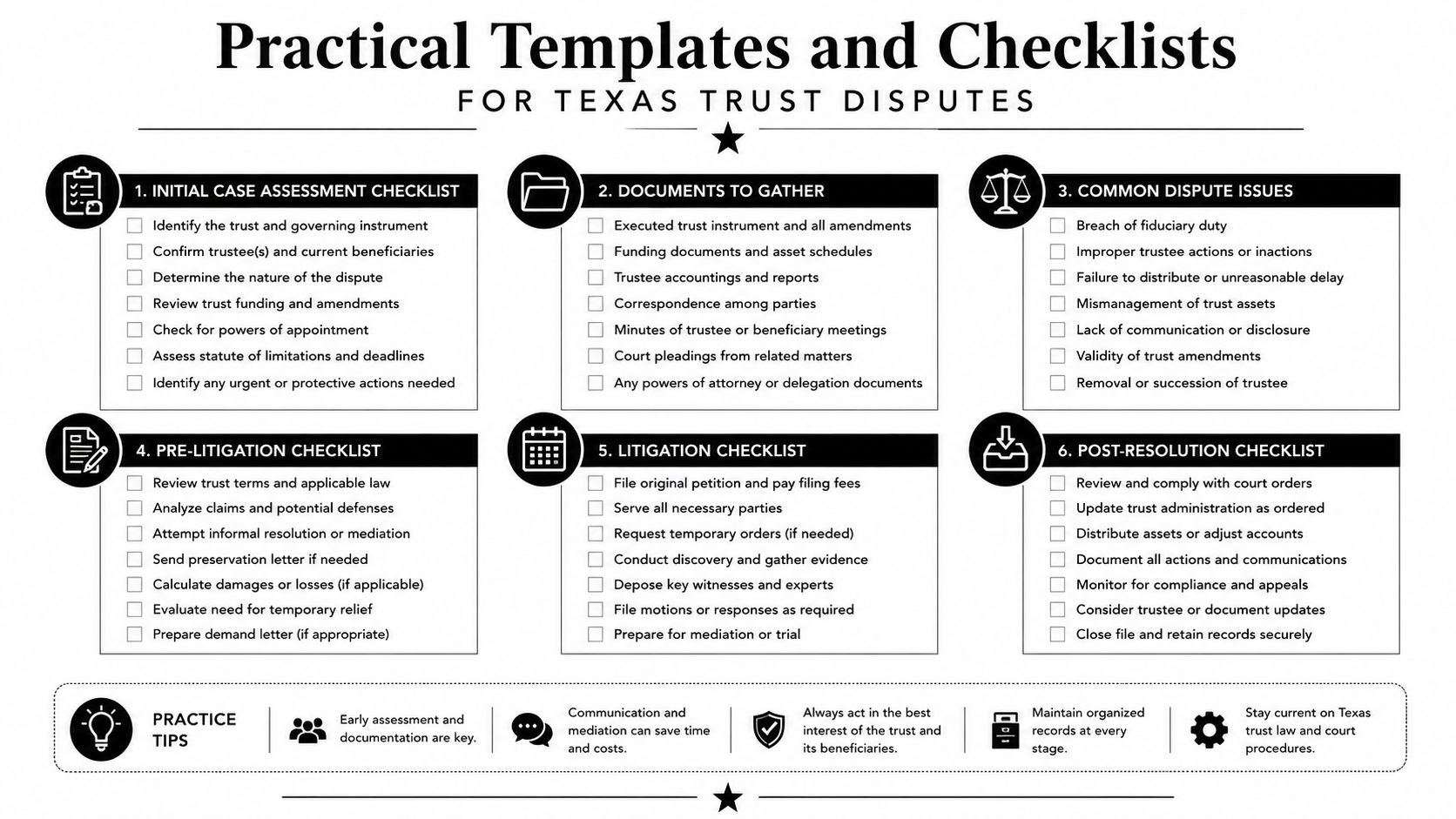
A simple checklist for beneficiaries
- Identify the trust documents: Gather the trust, amendments, and any related court orders.
- Track every request: Save dates, emails, and letters asking for accountings or explanations.
- Flag unusual transactions: Make a separate note for transfers, loans, distributions, or expenses that need review.
- List witnesses and advisors: Bankers, accountants, and family members may all have relevant information.
A compliance check for trustees
- Confirm authority first: Read the trust terms before taking action.
- Document every significant decision: Write down why the decision was made and what information was reviewed.
- Keep beneficiaries informed: Communication problems often become legal problems later.
- Review accountings before sending them: Small errors can create big distrust.
A trustee who documents decisions early is usually in a better position than one who tries to explain everything after a complaint has already been filed.
For an initial consultation, bring the trust instrument, amendments, account statements, tax returns if available, written communications, and any prior legal filings. That gives the attorney a real picture of the administration instead of a vague summary. It also helps the lawyer decide whether the issue belongs in negotiation, mediation, or court.
A trustee should get legal help quickly if there's any sign of threatened removal, because silence can look like admission. Beneficiaries should also avoid relying on memory alone, because a paper trail often decides what the court sees as fact. In Texas trust disputes, organized records often matter as much as the underlying disagreement.
Protecting Your Interests with Trusted Texas Legal Guidance
The cleanest rule is simple. If the trustee has a fixable problem, alternatives may be enough. If the trustee has caused real harm, hidden information, or created a conflict that threatens the trust itself, removal authority may be the right tool.
Before moving forward, ask three questions. Has the trustee breached a fiduciary duty, or are you mostly upset with the result? Can the problem be solved with accounting, mediation, or added oversight? And do you have the documents needed to prove your position if the dispute reaches court?
Families also need to think about the emotional side. Challenging a trustee can stir up grief, sibling tension, and old resentments, especially when the trustee is a relative. Texas law gives beneficiaries real protection, but it also gives responsible trustees a fair chance to explain themselves and correct mistakes.
When you meet with counsel, bring the trust, statements, accountings, messages, and any notes about what happened and when. A good Texas trust administration attorney will use those materials to assess the legal grounds, the likely cost, and whether settlement is realistic. That first meeting should leave you with a plan, not more confusion.
If you're managing a trust or planning your estate, contact The Law Office of Bryan Fagan, PLLC for a free consultation. Our attorneys provide trusted, Texas-based guidance for every step of the process.
If you're dealing with trustee conflict, accounting concerns, or a possible removal case, The Law Office of Bryan Fagan, PLLC can help you sort through the facts and protect the trust the right way. Visit Law Office of Bryan Fagan, PLLC to schedule a free consultation and get Texas-focused guidance on trust administration, estate planning, probate, guardianship, and asset protection.