Managing a loved one's trust can feel overwhelming, especially when the funeral is still fresh and the paperwork starts piling up. If you're sitting at the kitchen table with a death certificate, a trust binder, and a dozen unanswered questions, you're not alone. In Texas, a revocable trust usually doesn't stop at death, it shifts into a new phase of administration, and that transition is where families need calm, practical guidance from a Texas trust administration lawyer.
A revocable living trust is often designed to keep property moving outside probate, but the post-death process still has structure, deadlines, and fiduciary duties. The trust becomes a separate taxpayer, the successor trustee takes control, and the family has to sort assets, taxes, creditor issues, and final distributions in the right order. Under Texas practice, that middle stage matters because it's where confusion, delay, and sibling conflict usually begin.
When families understand what happens to a revocable trust when grantor dies, they can make smarter decisions and avoid costly mistakes. That means knowing when the trust becomes irrevocable, what the successor trustee must do first, when probate still comes into play, and how Texas Trust Code and Texas Estates Code rules shape the whole process. If you're trying to protect a parent's wishes, keep beneficiaries informed, and handle administration carefully, plain-English advice goes a long way.
When a Texas Family Faces Trust Administration After a Death
A week after a father's funeral, a San Antonio family sits at the kitchen table with coffee going cold and papers spread in front of them. Their mother created a revocable trust in 2018, and now she's gone too. The adult children know the trust was supposed to help, but no one is sure who has authority, what comes next, or whether they can start distributing property right away.
That is a very common moment of confusion. The trust did its job during life by holding title and organizing the family's plan, but death changes the legal posture of the trust and the trustee's duties. Under the Uniform Trust Code framework, a revocable trust is generally revocable unless the instrument says otherwise, and that revocation power ends with the settlor's death, which is why administration now belongs to the successor trustee instead of the parent who created it. The practical result is that the family needs a methodical post-death process, not guesses.
A Texas family also has to deal with the difference between grief and administration. The next steps usually include locating the trust, confirming death, protecting the property, and deciding what belongs in the trust administration versus what may still need probate. If the family is also arranging a move, a trusted logistics resource like TLC Moving & Storage long-distance relocation can help with the physical side of a transition while the legal side is handled separately.
Practical rule: The trust usually doesn't disappear at death. It changes jobs, from lifetime planning tool to post-death administration vehicle.
That shift is where a lot of families get stuck. The successor trustee now has to act like a fiduciary, keep records, and avoid rushing assets out the door before debts, taxes, and title issues are settled.
How a Revocable Trust Becomes Irrevocable
During the grantor's life, a revocable trust is flexible. The grantor can usually amend it, restate it, or revoke it entirely, because the power to change the plan belongs to the person who created it. After death, that power ends, and the trust becomes irrevocable, which means the written terms are now fixed.
Texas trust practice follows that basic rule. A successor trustee can carry out the document, but the successor trustee can't rewrite who gets what just because family members disagree. If a daughter is named successor trustee, she can't later decide to favor herself over her brother. Her job is to administer the trust as written, not to edit it for convenience or emotion.
What becomes permanent and what stays flexible
The big items are locked in. Beneficiary rights, distribution standards, and the identity of the trustee are all driven by the document the grantor left behind. Some administrative choices still exist, though, such as investment decisions, payment timing within the document's limits, and other powers expressly given to the trustee.
| Feature | During Grantor's Life | After Grantor's Death |
|---|---|---|
| Ability to amend | Usually yes | No, the terms are fixed |
| Control of assets | Grantor often controls them | Successor trustee controls administration |
| Tax treatment | Often reported under the grantor | Reported by the trust after death |
| Beneficiary payouts | Can be changed by the grantor | Follow the trust terms |
| Trustee role | Often held by the grantor | Passes to the named successor |
For families comparing trust options, a useful overview is top living trust picks for 2026, but the key point here is simpler. Once the grantor dies, the trust's core instructions lock in, and the legal focus shifts to carrying them out faithfully.
That transition matters because it triggers fiduciary duties, creditor protections, and tax reporting that didn't operate the same way during life.
The Successor Trustee Steps In
The first days after death should be organized, not improvised. A successor trustee in Texas usually starts by locating the original trust document and any amendments, then confirming the settlor's death with a certified death certificate. If the trust names alternate trustees, that succession clause should be reviewed right away so no one acts without authority.
The next move is to protect the trust property. That may mean changing locks on a homestead titled in the trust, notifying banks and brokerage firms, and making sure digital accounts aren't lost or drained. A trustee also needs to avoid mixing trust funds with personal money, because commingling creates recordkeeping problems and can lead to disputes later.
The early checklist that keeps things moving
- Secure the documents first: Keep the trust, amendments, deed records, and account statements together before any distribution starts.
- Order certified death certificates: Many trustees need more than one copy for banks, insurers, and tax filings.
- Open a dedicated trust account: Once the trust becomes irrevocable, it generally needs its own EIN and a separate account for administration.
- Give written notice to beneficiaries: Texas Trust Code practice requires notice to qualified beneficiaries under section 113.023 when administration begins.
- Keep personal spending out of trust funds: Even a temporary shortcut can create accounting problems and family suspicion.
For a focused overview, the resource First Steps for a Successor Trustee in Texas addresses what to do immediately after stepping into the trustee role. The related trustee guidance at https://texastrustadministration.com/successor-trustee-responsibilities-texas/ also fits this early stage, especially when the successor trustee needs a clear duties checklist.
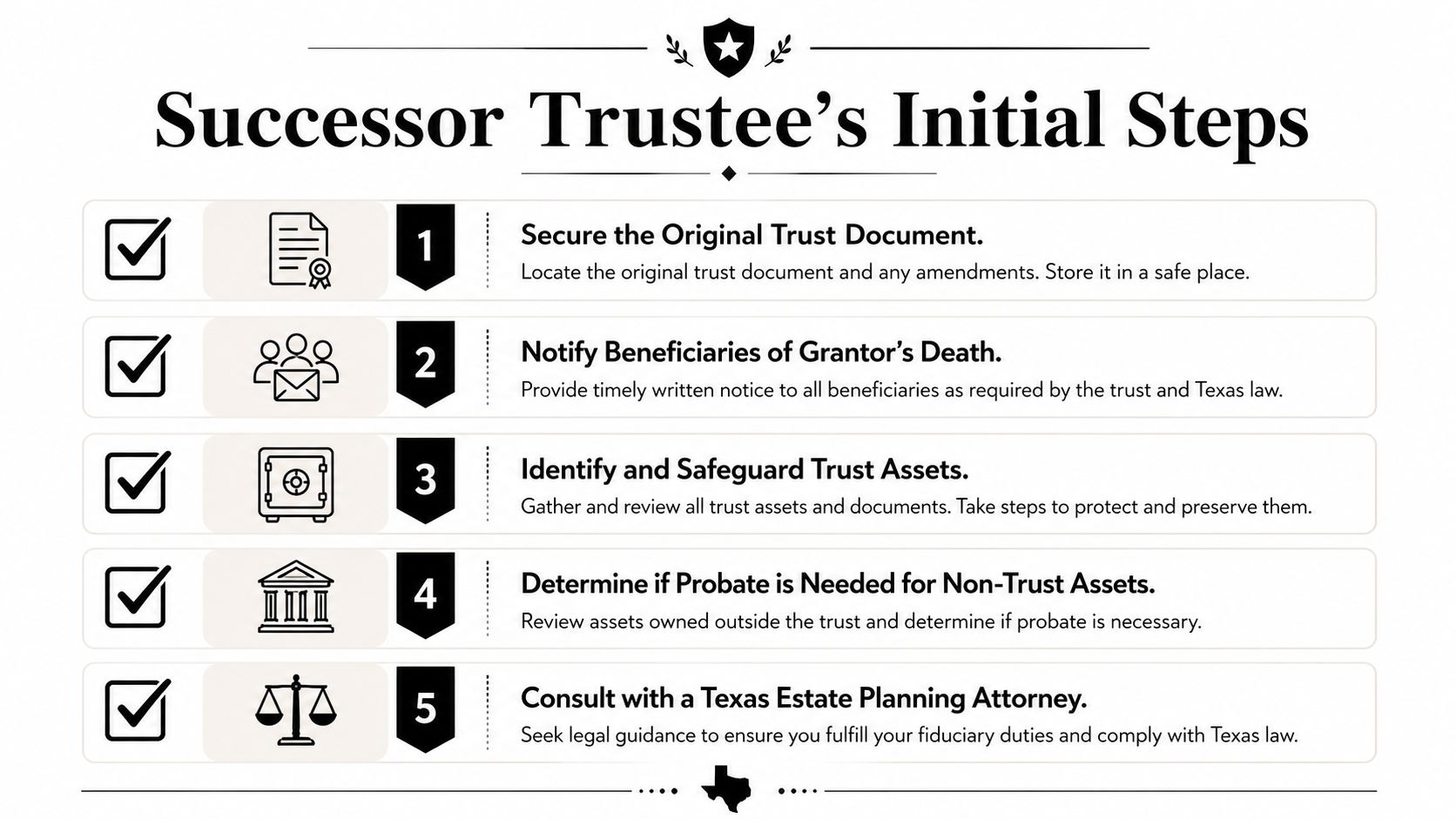
The trustee's job at this stage is simple to say and hard to do well. Gather the paper trail, secure the assets, and don't rush distributions until the administration picture is clear.
From Death to Distribution Through an Administrative Trust
The middle period is where many articles skip too fast. After death, the former revocable trust can function as an administrative trust, or interim trust, while the successor trustee sorts debts, taxes, appraisals, and distribution details. That holding period is not a delay for its own sake, it's the legal and practical bridge between death and final delivery of property.
A blended-family example makes the point. Suppose a surviving spouse is entitled to a life estate or continuing trust interest, one child's share must be held for minor grandchildren, a business interest needs appraisal before anyone knows its value, and a pecuniary gift has to be funded with precision. Some assets can be distributed outright right away, but others have to remain pooled until the trustee can match the trust terms to the actual paperwork and tax posture.
A trustee who distributes too early can create a mess that's hard to unwind.
That's why the trustee keeps estate and trust records separate, tracks liquid cash carefully, and holds back enough to deal with claims and taxes. If the trust document authorizes conservative reinvestment while cash is waiting to be distributed, the trustee should use authorized investments rather than letting idle funds sit without a plan. The question isn't whether beneficiaries are entitled to what the trust says, it's whether the trustee can safely and accurately fund each share yet.
The article how to settle a trust after death in Texas is a useful companion for trustees who are trying to map this stage to the legal steps. A short video overview can also help families visualize the sequence.
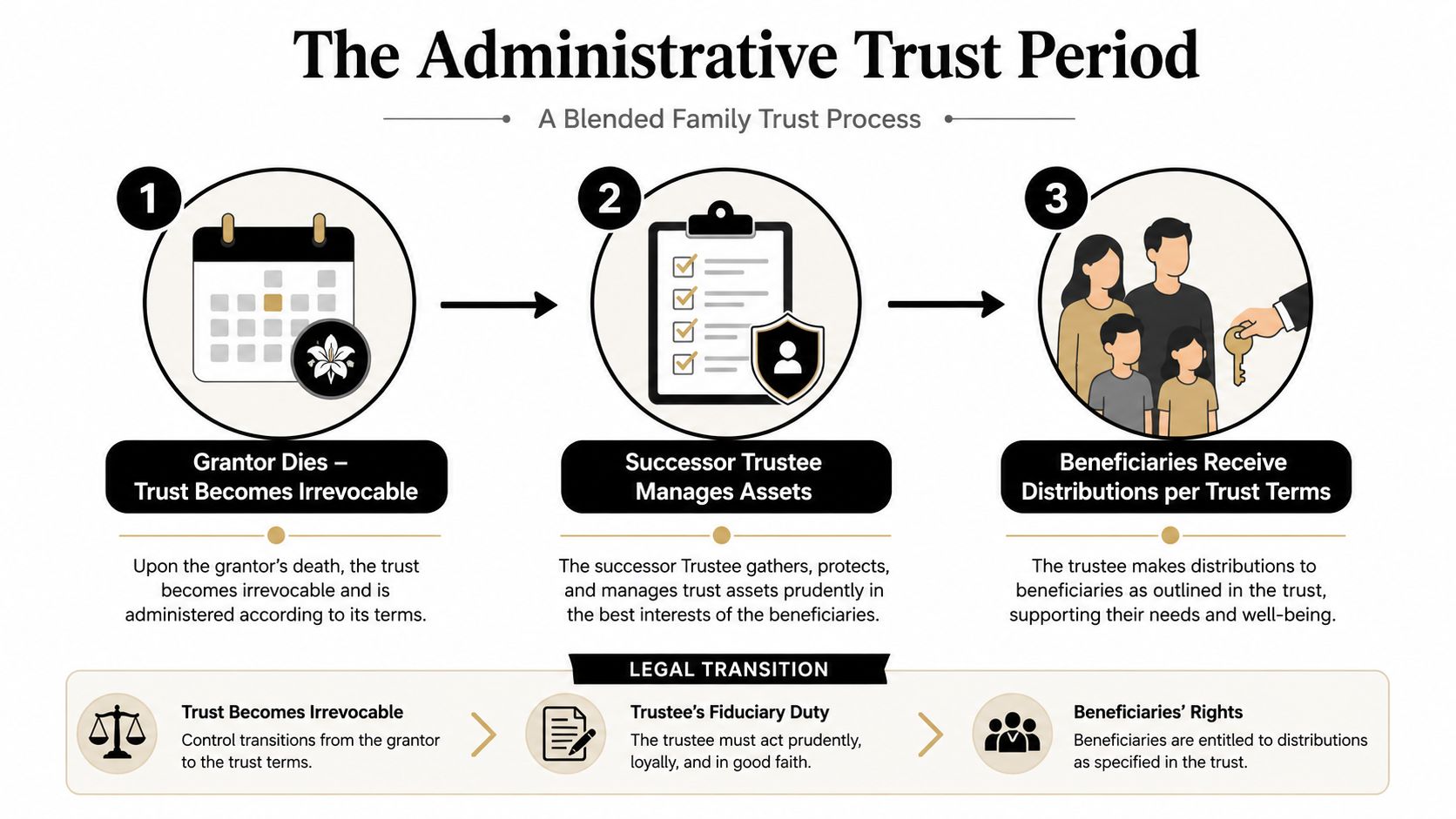
The trustee's real work is to make sure the final distribution matches the trust terms, not family assumptions.
How a Revocable Trust Interacts With Texas Probate
A funded revocable trust often avoids probate for the assets titled in the trust, but that doesn't mean probate never appears. Funding is the dividing line. If the property is in the trust, the successor trustee usually administers it under the trust terms. If property stayed outside the trust, Texas probate may still be needed for that asset.
That distinction matters because Texas families often think “we have a trust” means “we have no probate.” In practice, a small probate can still happen for a few reasons. A pour-over will may need to catch stray assets, a safe deposit box may require court authority, a vehicle filing may need cleanup, or a deed may have been recorded with the wrong vesting while the grantor was alive. The Texas Estates Code governs probate administration, while the Texas Trust Code governs the trust assets and trustee conduct.
Where the documents control different assets
| Issue | Funded Revocable Trust | Will Only, No Trust |
|---|---|---|
| Control of titled trust assets | Successor trustee handles them | Probate court process is usually needed |
| Privacy | More private administration | Public probate record |
| Title transfer | Often smoother for trust assets | Depends on probate filings |
| Family flexibility | Guided by trust terms | Driven by will and court process |
Families in places like Harris County or Travis County often choose a trust to reduce court involvement and keep sensitive matters out of a public probate file. Even so, a small probate sometimes remains the cleanest way to handle leftover property or fix a title problem. That's not a failure of the trust, it's a sign that one document governs the trust assets and another governs assets that never made it into the trust.
If a trust and will conflict, Texas law and the property titles usually decide which document controls which asset. The trustee and the personal representative need to sort that out before anyone starts handing out property.
Tax and Creditor Considerations After the Grantor Dies
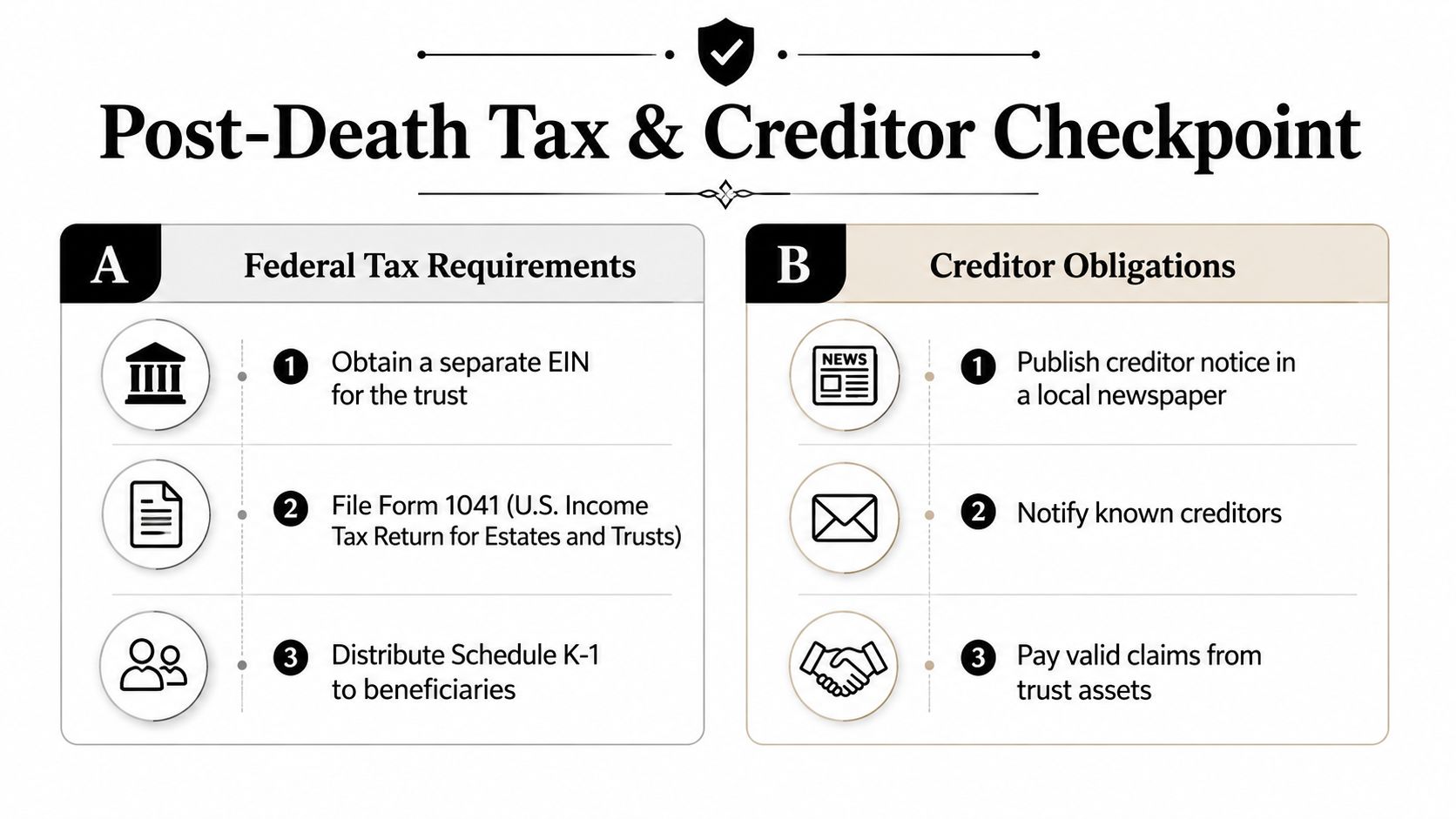
Death changes the tax posture immediately. The trust generally needs a separate Employer Identification Number, because it becomes a distinct taxpayer after the grantor dies. Income and deductions before death are reported on the decedent's final Form 1040, while post-death income is reported on the trust's Form 1041, which is why trustees need the records organized from day one.
A good trustee also protects basis records. Assets in a revocable trust are generally included in the grantor's gross estate at death, which is why they usually receive a stepped-up basis under Internal Revenue Code section 1014. If heirs later sell the property, they need clean cost-basis documentation to understand any gain. For a tax administration perspective, the discussion at filing tax returns for deceased estates is a helpful parallel, even though the trust itself still follows the Texas and federal rules that apply here.
Practical rule: Keep the date-of-death value, account statements, and appraisal papers together. The numbers matter later, not just now.
Creditor issues are just as important. Texas law gives creditors a route to assert claims against the estate, and some claims, like IRS or Medicaid-related claims, can carry special weight in the administration process. Beneficiary designations on retirement accounts usually sit outside the trust unless the account owner deliberately named the trust or the trust was coordinated with the plan documents, so the trustee has to check each account instead of assuming everything follows the same rule.
For Texas-specific tax guidance, the firm's resource on trust taxation in Texas fits neatly with this checkpoint. In some administrations, a no-bond independent administration can limit court involvement and reduce the number of moving parts beneficiaries have to watch, but good documentation still matters because taxes and creditor claims don't disappear just because the trust is private.
Common Disputes and How Texas Families Resolve Them
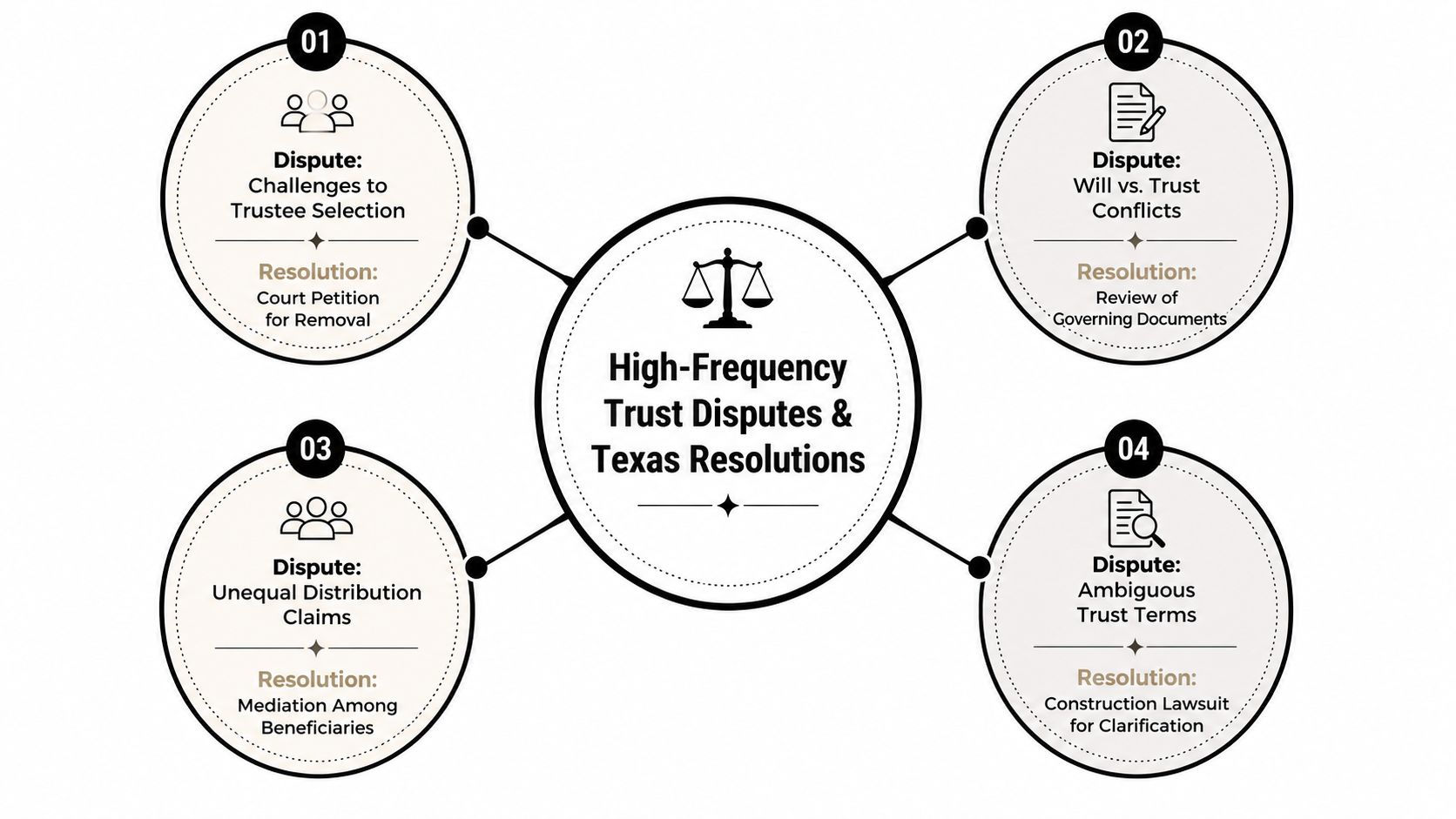
The disputes that derail Texas trust administrations usually show up early, and they often start with incomplete information. One flashpoint is trustee selection or removal, especially when siblings argue that the grantor was pressured at signing or that the named trustee is acting unfairly. Another is valuation, especially for closely held business interests or real estate where appraisals differ. A third is creditor claim disputes, where the trustee rejects a claim and the claimant pushes for court review.
What families should watch for
- Trustee conflict signs: A trustee who withholds information, delays notice, or starts making personal decisions outside the trust terms.
- Valuation red flags: Wide gaps between broker opinions, tax values, and appraisal reports for real property or business interests.
- Creditor warning signs: Claims that are vague, late, or unsupported by documents, or a trustee who denies a claim without preserving the paper trail.
- Distribution disputes: Beneficiaries who expect equal cash now, even though the trust gives the trustee discretion or sets different timing for different shares.
Texas Trust Code Chapter 114 becomes relevant when beneficiaries think the trustee has crossed a line. Mediation often helps when the fight is about misunderstanding or timing, while a trust construction lawsuit is more appropriate when the document itself is unclear. If the core problem is that the trust should have been drafted differently, Texas Property Code section 112.054 can sometimes be part of the discussion, but after death the better approach is usually to interpret and administer the trust, not casually rewrite it.
The best prevention happens long before death. A grantor can name alternates clearly, define trustee powers carefully, spell out distribution standards, and say how valuation should work if a business or ranch has to be divided. Those choices save heirs from guessing later and give the successor trustee a cleaner path when emotions are running high.
Your Next Steps After a Grantor's Death
When a Texas family is standing in the first week after death, the priorities are straightforward even if the emotions aren't. First, secure the original trust document. Second, get the certified death certificate. Third, create a current inventory of trust-funded assets so the successor trustee knows what is in the estate-settlement process.
A practical 30, 60, 90 day rhythm keeps things moving. During days 1 to 30, the trustee should notify beneficiaries, apply for the trust's EIN, and handle creditor notice steps under Texas Trust Code section 308A when they apply. During days 31 to 60, the focus shifts to marshaling assets, deciding how to report income on Form 1041, and resolving title transfer issues. During days 61 to 90, the trustee can work on the final accounting, beneficiary releases, and trust termination if the trust terms and administration posture allow it.
That timeline isn't rigid, but it keeps the trustee from doing things out of order. It also gives beneficiaries a fair picture of what's happening, which reduces conflict and unnecessary suspicion. Families who stay organized at the start usually have an easier time when it's time to distribute property and close the administration.
If you're not sure where your trust stands, or whether a probate step is still needed, get legal help early. A Texas estate planning attorney can explain the trust terms, review the funding, and help the trustee avoid mistakes that are hard to fix later. A calm review now often saves a much bigger problem later.
If you're managing a trust after a loved one's death, The Law Office of Bryan Fagan, PLLC can help you sort trustee duties, beneficiary communication, tax steps, and Texas trust administration issues with clear, practical guidance. Visit Law Office of Bryan Fagan, PLLC to schedule a free consultation and get help customized to your family's trust, probate, and asset protection needs.