Managing a loved one's trust can feel like one more hard task piled onto an already stressful season. If the trust was created in another state, the confusion grows fast, because the legal home of the trust may still follow the old rules even after your family has long since moved on. That hidden detail can affect privacy, taxes, creditor exposure, and the day-to-day work of the trustee.
A trust's situs is its legal home, and that home matters more than most families realize. In Texas, the answer is often favorable, but not always, and beneficiaries sometimes support a move only after they understand both the protection and the tradeoffs. With the right legal guidance, the process can be clear, orderly, and far less intimidating than it first appears.
When Your Trust's Legal Home Costs You More Than You Think
A widow in Houston can inherit a trust that was drafted years ago in another state, then learn the trust still follows that state's rules for administration and dispute handling. Her trustee may be doing everything in good faith, yet the family still faces a public process, extra legal steps, and a structure that no longer fits how the family lives. That's when trust situs starts to matter in a very real way.
The legal home of a trust determines which state's law governs administration, where court disputes are heard, and which tax rules may apply. In Texas, families often look at a change because the state offers no state income tax on trusts, no state estate tax, and no inheritance tax, along with privacy benefits and strong beneficiary-creditor protections under Texas trust law. Texas already had structural advantages before its 2021 reform, and after that reform, the Texas Bankers Association projected an additional $6 billion in trust assets managed in Texas and about $60 million in management fees for Texas companies, excluding related accounting and estate-planning revenue (Texas dynasty trust overview).
A simple way to think about it
A trust's situs works like its legal mailing address, except the consequences go much deeper than where an envelope lands. If the situs stays outside Texas, the trust may keep following outside rules even when the family has strong reasons to prefer Texas administration. That's why people often compare trusts with wills, especially when they're deciding whether a trust still matches the family's goals, and a plain-language resource on wills vs trusts for Texas families can help clarify those differences.
Practical rule: if the trustee, the beneficiaries, and the property all have changed, the trust document deserves a fresh legal review before anyone assumes the old situs still makes sense.
A successor trustee also needs to know where to begin. The First Steps for a Successor Trustee in Texas resource is useful because it focuses on what to do immediately after stepping into the trustee role, which is exactly when situs questions often surface. If the family owns assets in another state, the separate situs issue may also overlap with the difference between offshore and Texas trusts, which is why this internal guide on offshore vs Texas trusts can be helpful for comparison.
Understanding Trust Situs and Why It Matters
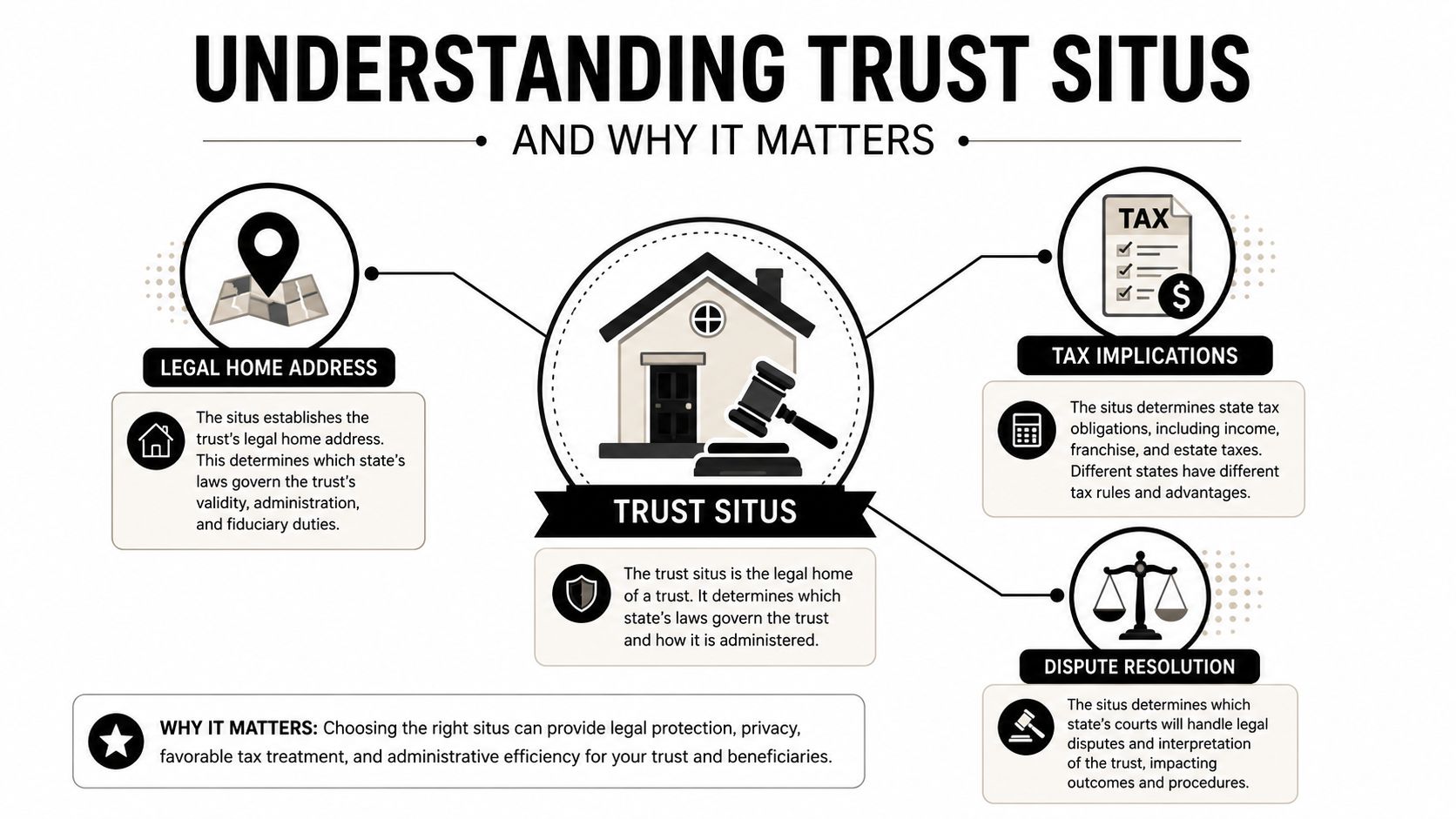
Trust situs is the trust's legal home address. It tells lawyers, trustees, and courts which state's law governs administration, where disputes are decided, and how the trust is treated for tax and creditor purposes. Many families assume that once they move to Texas, the trust follows them. That usually isn't true.
The original trust document often names the governing law, and that language still matters unless the trust is changed through the right legal process. Texas trust administration also turns on fiduciary principles, which means the trustee must act loyally, prudently, and in the beneficiaries' best interests while staying within the trust document and the Texas Trust Code. Those duties don't disappear just because the trust owns Texas assets.
Why this detail changes the whole administration plan
A Texas situs can make administration feel cleaner because the state doesn't require trust registration, which supports confidentiality. It also helps families avoid ancillary probate for trust assets, keeping those assets out of the public probate record when the trust is properly funded and administered. That privacy point matters to beneficiaries who don't want family finances aired in court.
If you're trying to compare trust structures, it helps to read the governing law clause line by line. A Texas estate planning attorney will usually check whether the trust allows a change in situs, whether the trustee has relocation authority, and whether the move would affect taxation or court supervision. Those questions are central to fiduciary duties in Texas, because the trustee can't just follow convenience if the trust terms say something different.
The Texas situs conversation also connects to trust modification. People searching for how to modify a trust in Texas often discover that changing a trust's legal home is not the same as changing a beneficiary or rewriting the entire instrument. The document controls first, and only then do the statutes matter.
Five Major Advantages of Texas Trust Law
A family usually feels the difference in Texas trust law when administration starts to get real. The trust may hold marketable securities, a family business interest, mineral rights, or real estate in more than one state. At that point, the legal home of the trust affects taxes, creditor exposure, duration, and who has to sign off when changes are proposed. That is why Texas draws attention from trustees and beneficiaries who want a structure that is easier to administer without losing legal control.
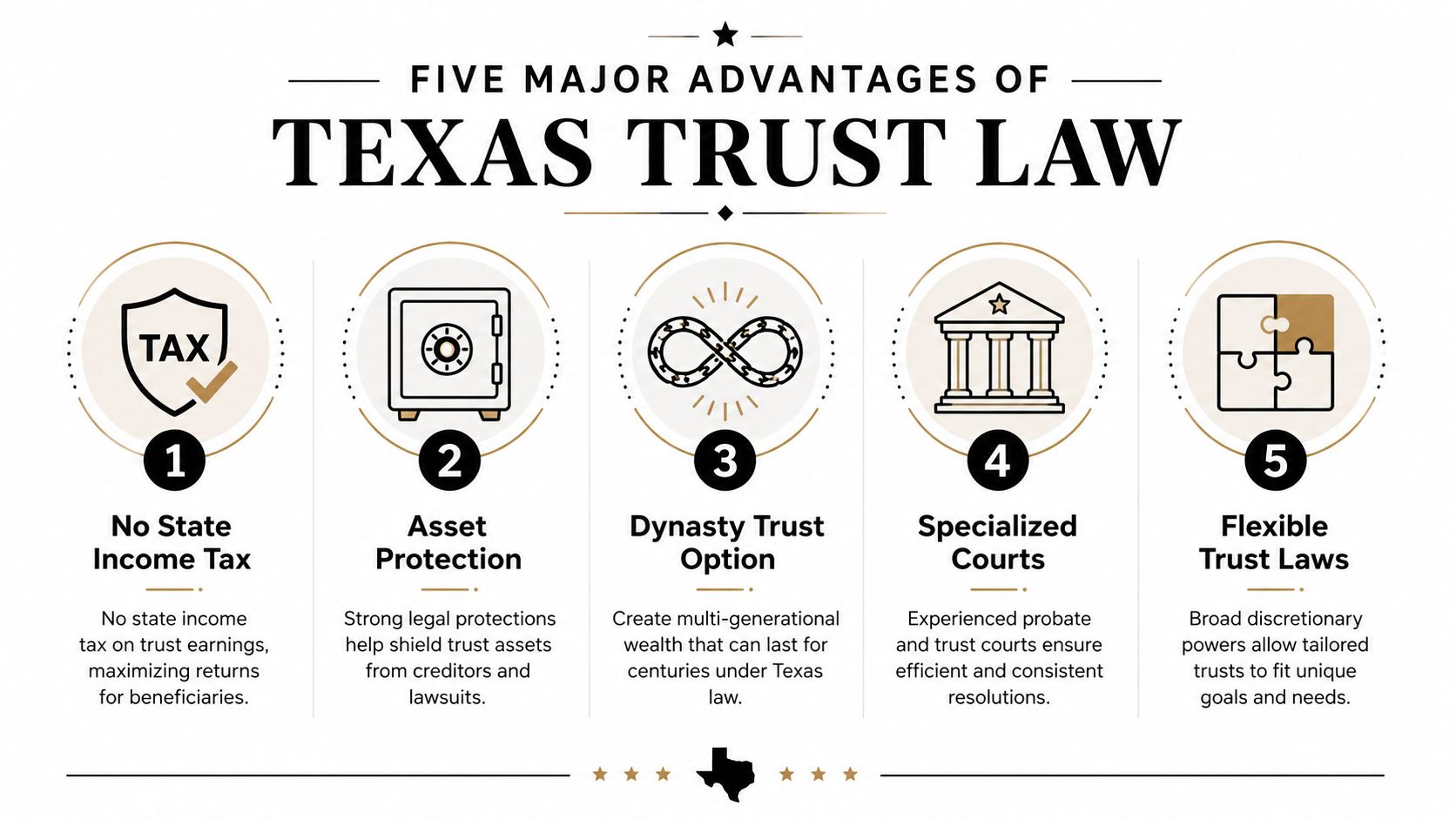
The five most important advantages
- No state income tax on trusts. Texas does not impose state income tax, state estate tax, or inheritance tax on the trust itself, which can simplify the administration picture for families comparing jurisdictions. Texas estate planning overview
- Stronger protection against creditor claims. Texas spendthrift-trust rules under Property Code § 112.035 can limit what a beneficiary's creditors may reach, so a trust that is properly drafted and administered has a clearer shield than many families expect.
- Long duration for family planning. For certain Texas-situs trusts, the law allows very long duration, and that makes it possible to keep assets in trust for more than one generation without forcing an early termination. Texas dynasty trust overview
- Administration tools that can reduce friction. Texas recognizes planning tools such as directed trusts and decanting, which can help a trustee adjust the way a trust is managed when family circumstances change, without rewriting the entire plan. Texas dynasty trust overview
- Privacy. Trust administration can remain outside public probate records, and Texas does not require trust registration, which helps preserve confidentiality for families who do not want their financial affairs in the public eye. Texas estate planning overview
The tax point matters, but it is only part of the picture. If a trust is set up in Texas, the trustee still has to check how the trust is taxed under the governing instrument and applicable law, because administration and tax treatment are not the same thing. For a closer look at that issue, see this guide on trust taxation in Texas.
The duration rules also matter in a practical sense. Older Texas trust materials discussed a shorter period for long-term trusts, so families and advisers who rely on older forms sometimes miss how much the legal framework has changed. That is one reason trustees should not assume a trust document written years ago still reflects the best administration path today.
Texas is attractive because it combines these features in one place. The result is not just a tax discussion, it is a fiduciary one, because every one of these advantages still depends on the trustee having authority, beneficiary rights being handled correctly, and the trust instrument allowing the move.
Legal Mechanisms for Moving Your Trust to Texas
Changing trust situs is not just a paperwork update. Trustees usually need a legal path that fits the trust document, the beneficiaries, and the state law that currently governs the trust. The process can be simple in some trusts and much more formal in others.
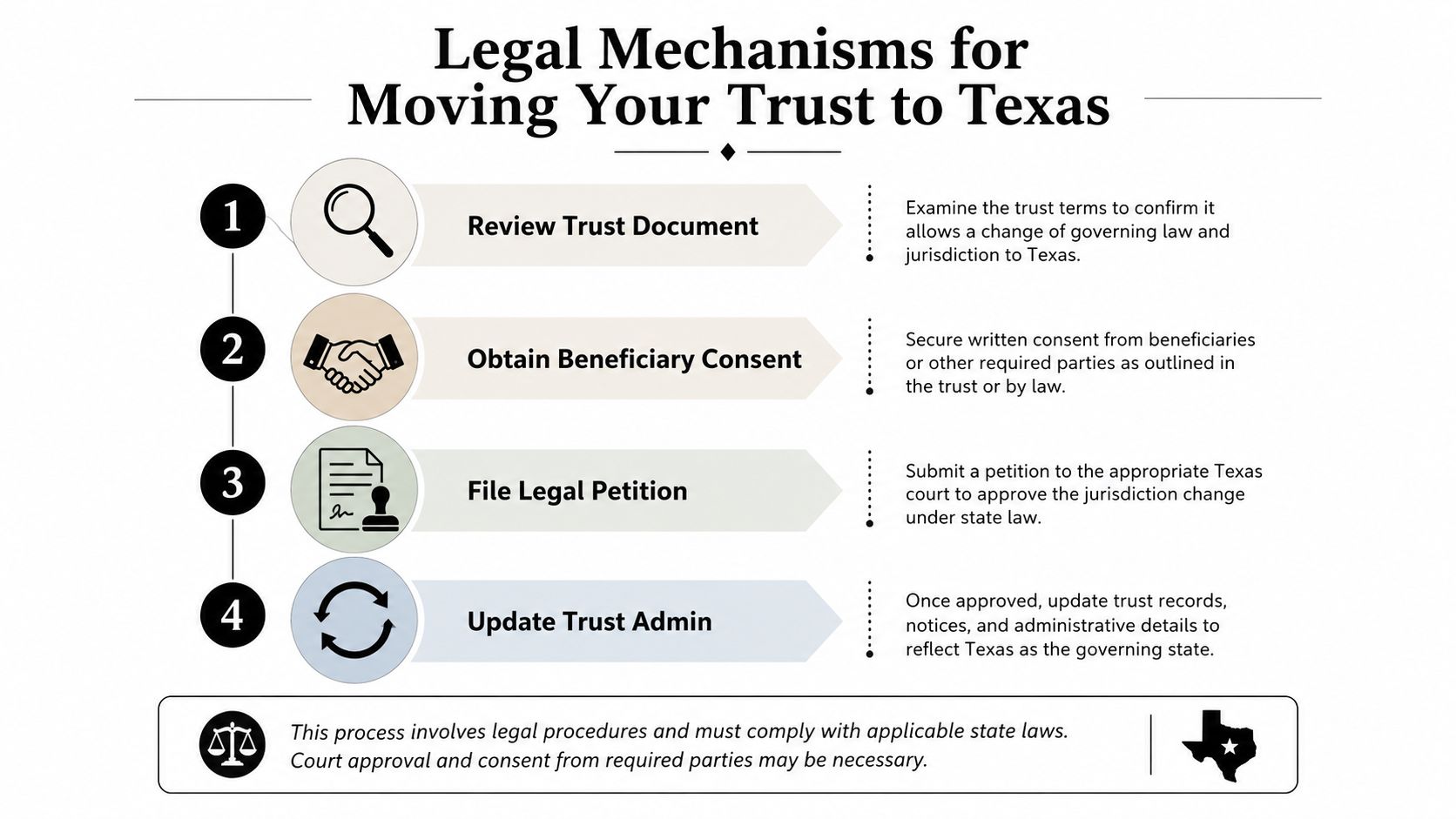
Four common pathways
- Choice-of-law language. Some trusts already contain a clause that lets the trustee shift governing law or administration to another jurisdiction if the document permits it.
- Decanting. If the trustee has the right distribution authority, Texas law may allow assets to be moved into a new trust with updated terms, a process explained in more detail in this decanting a trust in Texas guide.
- Court reformation. Some trusts need judicial approval, especially when the document is unclear, beneficiaries disagree, or the modification affects material terms.
- Administrative relocation. In some situations, the trustee can relocate administration and records without changing the trust's core terms, but that still needs careful review.
A neutral legal explanation notes that situs determines which state's income tax applies, which law governs administration, and where judicial relief is sought, and it also says a trustee typically should notify qualified beneficiaries at least 60 days before a proposed transfer, giving them a chance to object (JD Supra explanation of trust situs). That notice issue is where many families get surprised. A beneficiary may not be able to stop the move, but they may have a real basis to object if the trustee hasn't followed the trust or the governing law correctly.
What trustees should document
The trustee should keep a written record of the legal reason for the move, the notice sent to beneficiaries, any objections received, and the steps taken to stay compliant with both the old jurisdiction and Texas Trust Code requirements. That paper trail matters if the move is later challenged. It also helps the trustee show that the decision was made in good faith and with fiduciary care.
If the trust involves retirement benefits, special rules can apply. Texas law allows a member or retiree to designate a trust as beneficiary for certain retirement-system benefits, but if the trust has more than one beneficiary, it can't receive benefits unavailable to multiple designated beneficiaries under the retirement chapter, and the trustee may also exercise rights to elect benefit options and name subsequent beneficiaries (Texas Government Code § 854.503).
When Texas Situs Might Not Be the Right Choice
Texas is a strong jurisdiction, but strong doesn't mean perfect for every trust. Beneficiaries sometimes support a move too quickly, then realize the new structure doesn't match their real goals. A careful lawyer should ask whether the move improves the trust or just follows a trend.
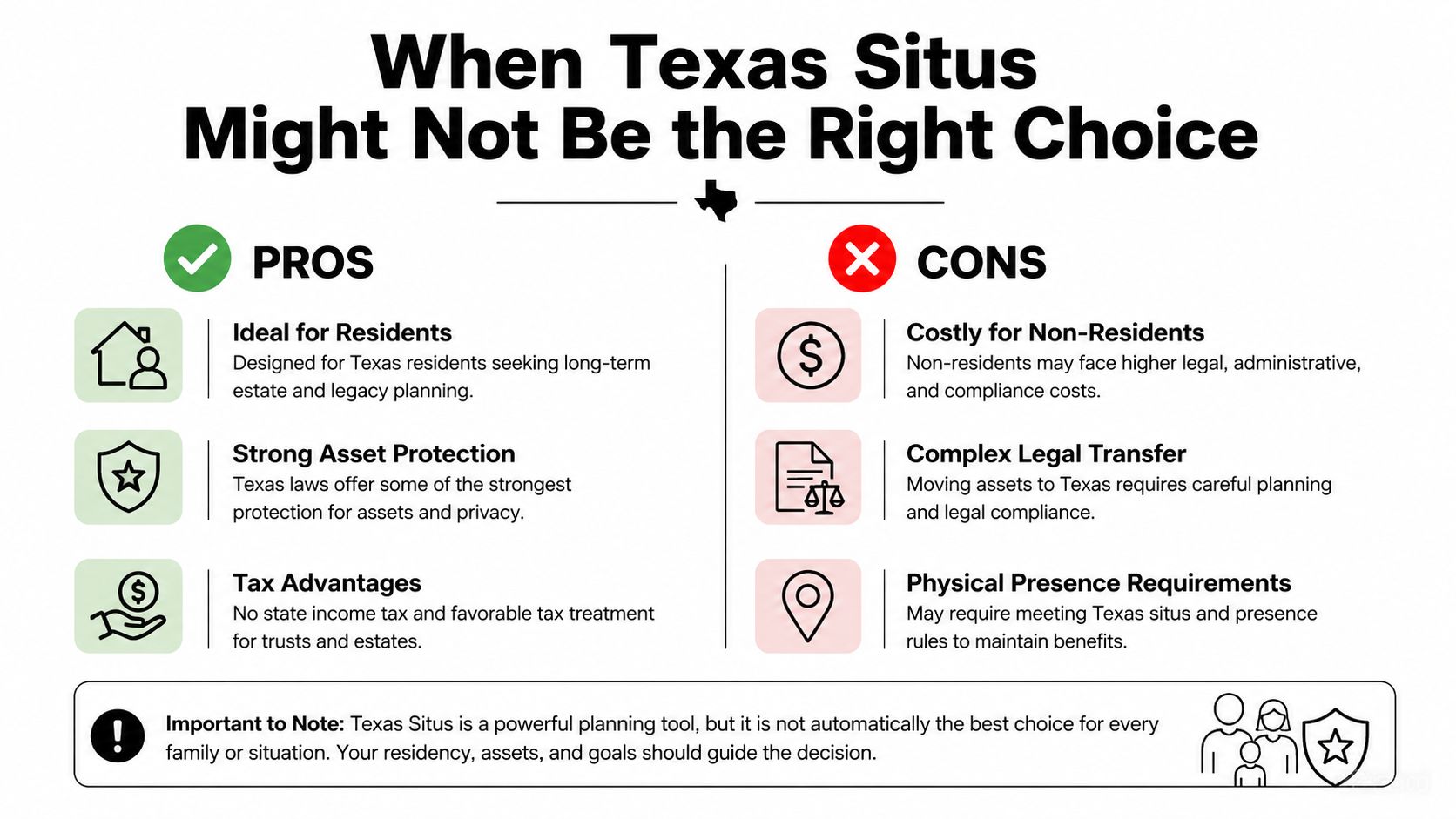
The main tradeoffs families miss
Texas does not recognize a self-settled asset-protection trust, so moving situs here doesn't erase creditor risk for assets the trustmaker still owns in that kind of structure (Texas trust analysis on trust structures). That point matters because some families hear “Texas trust law” and assume every trust becomes shielded from every claim. It doesn't.
Some beneficiaries also prefer shorter duration, not a 300-year dynasty structure. A long life can preserve compounding and control, but it can also lock in rules that future beneficiaries may want to change. That's a real tradeoff between preservation and flexibility.
A Texas move should solve a problem the family actually has. If the move only adds complexity, the better answer may be to leave the trust where it is and use narrower changes instead.
The same source that highlights Texas's dynasty-trust expansion also makes the broader point that long-horizon planning can create tension for beneficiaries who want more immediate access or a different creditor-and-divorce-risk profile (Texas trust analysis on trust structures). That's why a Texas situs isn't automatically the better answer for every family.
A good lawyer will also ask whether the trust owns real estate in another state, whether the current trustee can administer from Texas without triggering new issues, and whether the family wants privacy more than flexibility. Sometimes the older trust jurisdiction already offers the right balance. In those cases, the best answer is not to move the situs, but to fix only the part that's broken.
Your Trust Situs Change Checklist and Next Steps
Before anyone changes a trust's legal home, the family should gather the actual trust document, any amendments, and any letters of direction or side agreements. The governing law clause is the first place to look, because that language usually tells you whether Texas is even an available option. If the trust contains a trustee relocation clause, that should be reviewed next.
What to collect before meeting a lawyer
- The full trust and all amendments. A partial draft won't show whether the trustee has authority to move the situs.
- Current beneficiary list and contact information. Notice requirements can turn into objections if people are left out.
- A property inventory. Real estate, brokerage accounts, business interests, and retirement assets can all affect the analysis.
- Any prior court orders or disputes. Those records can limit what the trustee can safely do.
- Tax returns and state residency facts. Those details help a Texas estate planning attorney understand the tax and administration picture.
If the trustee is considering the move, the next question is whether the trust can be updated by consent, decanting, reformation, or administrative relocation. That choice affects timing, notice, and the risk of litigation. Families who already anticipate conflict should not guess at this step.
Best practice: ask counsel to separate the legal question from the family question. A trust can be legally movable and still be a bad emotional fit for the people involved.
A beneficiary should also ask what rights they have if they object. A trustee should ask what fiduciary duties in Texas require before any assets are retitled or records are moved. These are the questions that keep small disputes from turning into expensive ones.
For a broader trustee checklist, the DIYAuctions trustee guide offers a practical look at trustee responsibilities after death, which can be useful when a family is already in the middle of administration. That kind of planning helps a trustee stay organized before a situs change is even considered.
Getting Trusted Texas Trust Guidance
A trust situs change should be handled with calm, specific legal advice, not guesswork. Families often need help balancing Texas Trust Code issues, beneficiary consent questions, tax planning, and the practical realities of administering a trust across state lines. The right lawyer can help a trustee move carefully, or tell the family not to move at all.
The Law Office of Bryan Fagan, PLLC works with trustees, beneficiaries, and families on trust administration, fiduciary duties, and estate planning under Texas law. That includes helping people evaluate whether a situs change fits the trust terms, whether notice is required, and how to manage disputes before they get worse. If you've been searching for a Texas trust administration lawyer or a Texas estate planning attorney, getting advice early can save time and reduce conflict.
If you're serving as a trustee or beneficiary and want a legal review of your trust's situs, schedule a free consultation with an attorney who understands both the technical rules and the family dynamics. The right guidance can make the difference between a trust that protects a family and one that keeps creating avoidable problems.
If you're managing a trust or planning your estate, contact The Law Office of Bryan Fagan, PLLC for a free consultation. Our attorneys provide trusted, Texas-based guidance for every step of the process, from trust situs changes to fiduciary disputes and long-term planning. Visit Law Office of Bryan Fagan, PLLC to get started with clear advice customized to your family's goals.