Managing a loved one's trust can feel overwhelming, especially when the trust owns a Texas home that now needs to be sold. You may be the successor trustee, sorting through documents, answering family questions, and wondering whether you can list the property, accept an offer, or sign the deed without court involvement.
A trust real estate sale by trustee in Texas is manageable when you separate the legal questions from the practical ones. The trust instrument, Texas Trust Code, fiduciary duties in Texas, title requirements, beneficiary interests, and tax consequences all matter. A Texas trust administration lawyer can help you establish authority before the property is marketed, rather than discovering a documentation problem when a buyer is ready to close.
Managing a Trust Property Sale in Texas
Consider a common situation. A parent placed a Texas residence in a trust and named one adult child as successor trustee. After the parent's death, the child learns that the home needs to be sold so the trust can be administered and the beneficiaries can receive what the trust provides. The trustee may understand the family history, but still feel uncertain about the next signature, notice, or title requirement.
That uncertainty is understandable. A trustee isn't just selling a house as an individual owner. The trustee is managing property for beneficiaries and must follow the trust terms, preserve the property's value, avoid conflicts, and maintain a record of the decisions that led to the sale.
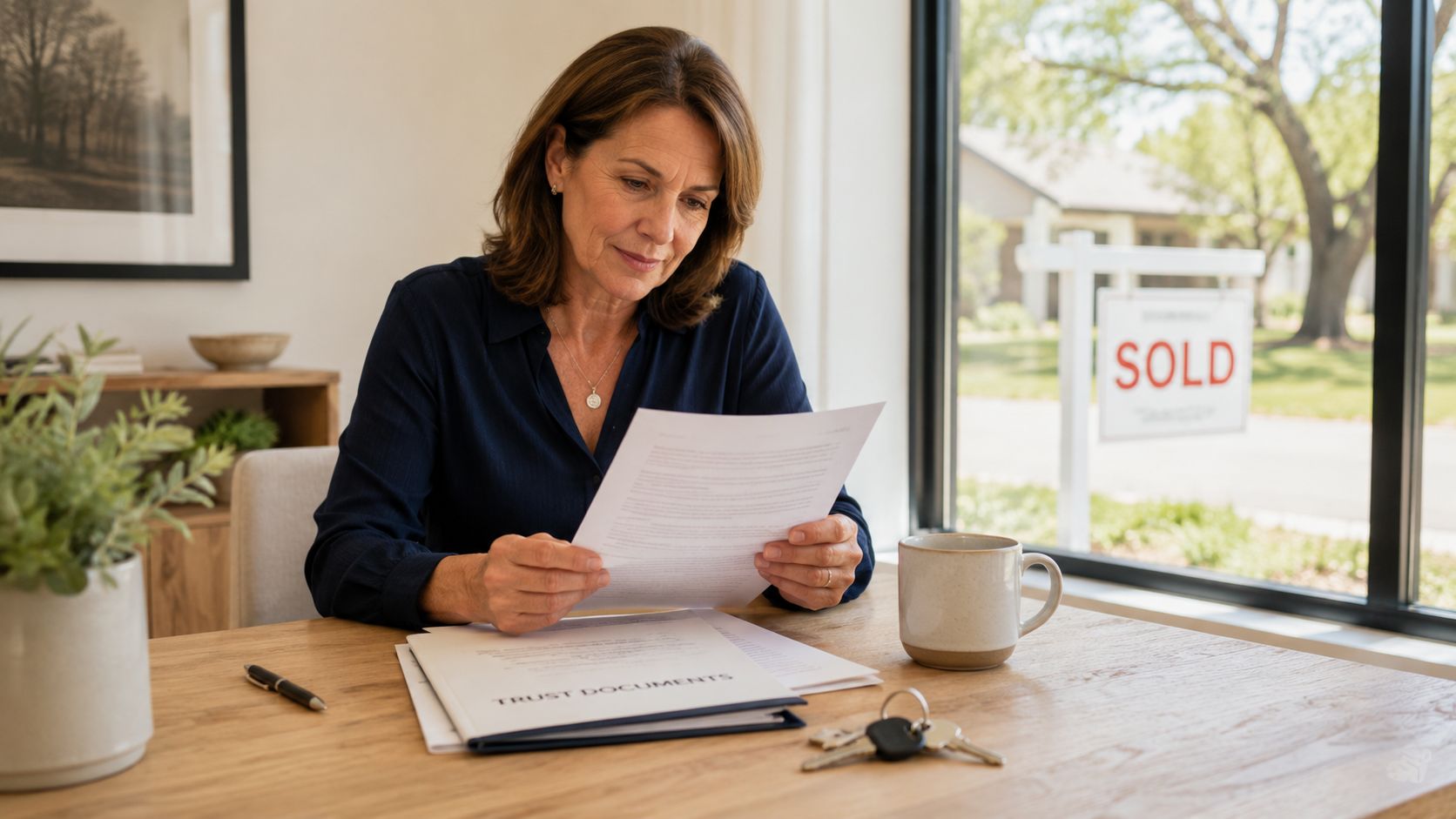
Texas law provides a workable framework. The trustee generally begins by reviewing the trust and confirming whether the property is titled in the trust or in the trustee's representative capacity. From there, the trustee can coordinate with a real estate professional, title company, tax adviser, and legal counsel.
What the trustee must decide first
Before listing the property, identify:
- Authority to sell: Read the trust instrument, amendments, successor trustee provisions, and any restrictions on real estate transactions.
- Beneficiary communication: Determine whether the trust requires notice or consent, then plan communications that explain the proposed sale without surrendering the trustee's independent judgment.
- Property strategy: Consider marketing, repairs, an appraisal or market analysis, insurance, taxes, liens, and whether an as-is sale serves the trust.
- Closing proof: Ask the title company what it needs in an authority packet, including trust certifications, trustee appointment evidence, and related records.
- Proceeds management: Keep the sale proceeds in trust and distribute them only after expenses, taxes, reserves, and trust instructions are addressed.
The safest process is usually the one that can be explained later. If a beneficiary questions the price, timing, or buyer, the trustee should be able to show the information considered and the reason for the decision.
A careful trustee can also review First Steps for a Successor Trustee in Texas for immediate administrative tasks after taking office. For families in Houston, Dallas-Fort Worth, Austin, San Antonio, The Woodlands, and surrounding communities, The Law Office of Bryan Fagan, PLLC provides Texas-focused guidance on trust administration, estate planning, probate, guardianship, and asset protection.
Confirming Trustee Authority Under Texas Law
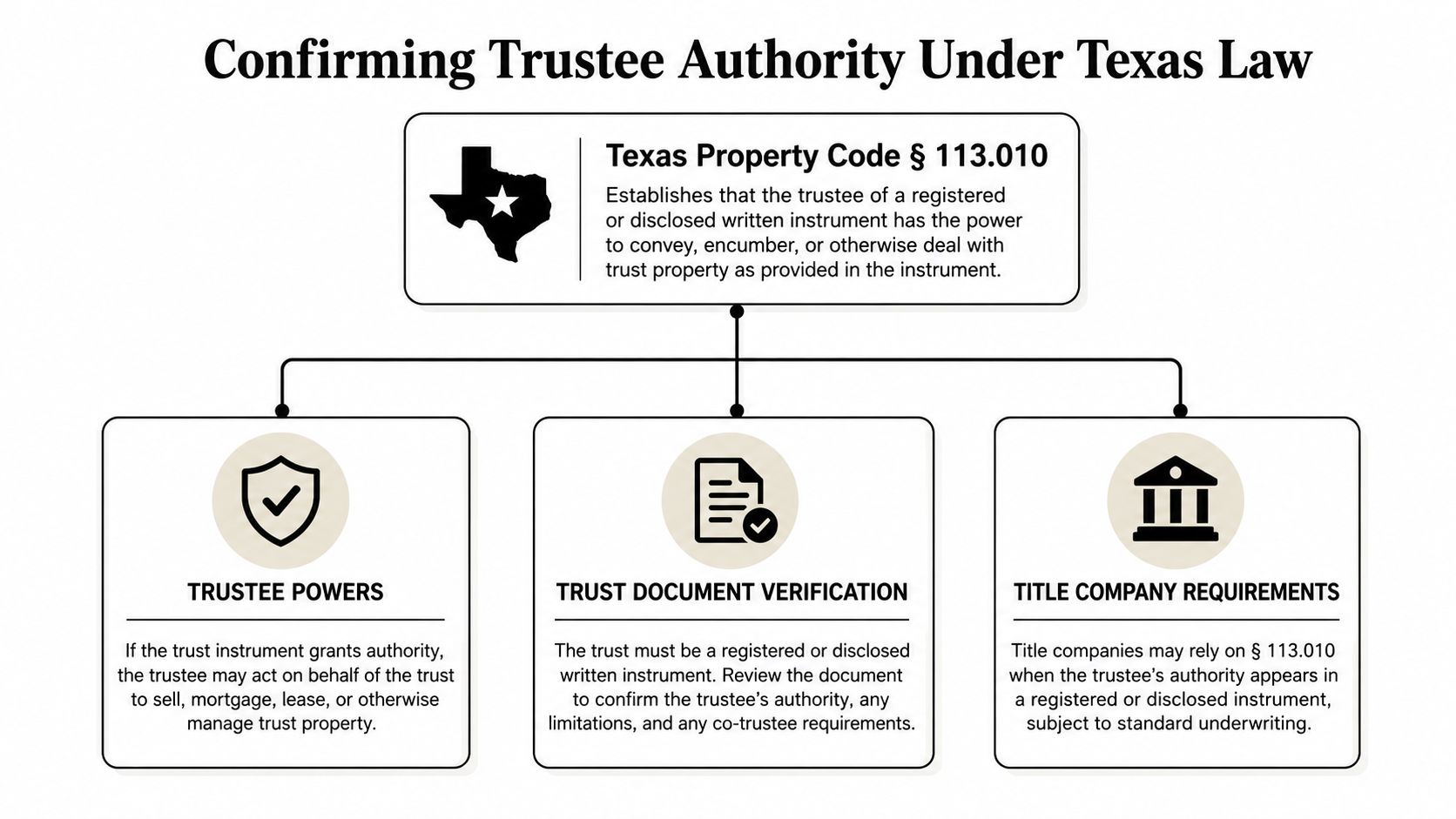
The first legal question is simple: does the trustee have authority to sell this property? The answer begins with the trust instrument, but Texas statutory law supplies an important baseline.
Texas Property Code § 113.010 allows a trustee to “contract to sell, sell and convey, or grant an option to sell” real or personal property. The statute permits a public auction or private sale, and it allows a transaction for cash, credit, or part cash and part credit, with or without security. This broad language means a trustee sale isn't confined to one marketing method or payment structure unless the trust instrument or another legal restriction narrows that power. Texas Property Code § 113.010 remains part of the current Texas Trust Code framework, and an accessible 2015 compilation contains the same sale language.
Read the trust before relying on the statute
The statute doesn't eliminate the need to review the trust. Look for:
- A power of sale: The instrument may expressly authorize the trustee to sell, convey, lease, or manage real estate.
- Successor trustee provisions: Confirm that the person signing is properly serving and whether more than one trustee must act.
- Amendments or restatements: A later document may change the property instructions or signing authority.
- Beneficiary conditions: Some trusts require notice, consent, or compliance with special sale terms.
- Distribution instructions: The trust may direct how sale proceeds must be held or distributed.
The title company will also want evidence, not merely an assertion, that the trustee has authority. That is why the authority packet matters so much in practice.
Avoid conflicts and self-dealing
Texas Property Code § 113.053 generally prohibits a trustee from directly or indirectly buying or selling trust property to the trustee, an affiliate, a director, officer, or employee of the trustee or an affiliate, a relative, the trustee's employer, partner, or another business associate, unless an exception applies. The Texas self-dealing rule under § 113.053 protects beneficiaries by requiring the trustee to remain neutral.
Suppose a trustee's sibling wants to buy the trust's property. The trustee may believe the offer is fair and may want to help the family avoid a lengthy listing. That doesn't make the transaction safe. The family relationship creates a conflict concern, and the trustee should obtain legal advice, examine the trust and statutory exceptions, document value, and consider whether an independent decision-maker or court guidance is appropriate.
Practical rule: A trustee should treat any proposed sale involving the trustee, a relative, or a business associate as a legal-risk transaction before treating it as a convenient family solution.
A detailed explanation of the Texas Trust Code and trustee duties can help a successor trustee understand how sale authority fits within broader fiduciary responsibilities.
Distinguishing Trust Administration Sales From Foreclosure Sales
Search results for “trust real estate sale by trustee Texas” often lead readers to foreclosure information. That creates a serious procedural risk because ordinary trust administration sales and substitute trustee foreclosure sales are different transactions.
An ordinary trust administration sale occurs because a trustee is managing property owned by a trust. The trustee's authority comes from the trust instrument and the Texas Trust Code. The trustee may use a private sale or public auction, subject to the trust terms, fiduciary duties, conflict restrictions, title requirements, and any other applicable law.
A foreclosure-style sale occurs after a borrower defaults under a deed of trust. A substitute trustee conducts the sale under foreclosure law and the deed of trust. The notice, location, timing, and bidding rules are not a substitute for ordinary trust administration procedures.
Compare the two processes
| Feature | Trust Administration Sale | Foreclosure Sale |
|---|---|---|
| Reason for sale | Administration, management, or distribution of trust property | Enforcement of a security interest after default |
| Primary authority | Trust instrument and Texas Trust Code | Deed of trust and foreclosure statutes |
| Person conducting sale | Acting trustee of the property-owning trust | Substitute trustee appointed for the foreclosure |
| Sales channel | Private sale or public auction may be available under Texas Property Code § 113.010 | Statutory foreclosure sale process |
| Notice framework | Depends on the trust, transaction, title requirements, and applicable law | Public notice must be given at least 21 days before the sale, as described in Texas foreclosure guidance |
| Sale date and time | Not automatically tied to a monthly courthouse sale date | First Tuesday of the month, between 10:00 a.m. and 4:00 p.m., with the sale beginning at the stated time or within 3 hours after it, under the cited foreclosure rules |
| Location | Set through the transaction and closing arrangements | County courthouse or permitted county location, with the sale area designated and recorded by the county commissioner's court |
| Buyer's concern | Trustee authority, title insurability, deed form, liens, and trust restrictions | Foreclosure validity, statutory notice, lien priority, and possession consequences |
The foreclosure timing and location requirements are summarized in Texas county foreclosure guidance and the cited Texas foreclosure materials. A trustee selling a trust-owned home through ordinary administration shouldn't automatically publish a foreclosure notice or wait for the first Tuesday. That would apply the wrong legal roadmap.
Ask which trustee is acting
The title “trustee” doesn't identify the process by itself. A successor trustee administering a family trust is different from a substitute trustee appointed under a deed of trust. If the property is being sold because the trust owns it and the trust needs to be administered, begin with the trust document and title records. If the sale is tied to a loan default, obtain foreclosure counsel before taking action.
Confusing the two processes can create delay, defective notices, an improper deed, or an uninsured transfer. The first practical step is to identify the source of authority before discussing sale timing or bidding instructions.
Preparing Authority Packets and Closing Documentation
A trustee may have legal authority and still face a closing delay because the title company cannot verify it. Title and escrow professionals increasingly want an authority packet early in the transaction, especially when the trust instrument is private, amended, incomplete, or difficult to interpret.
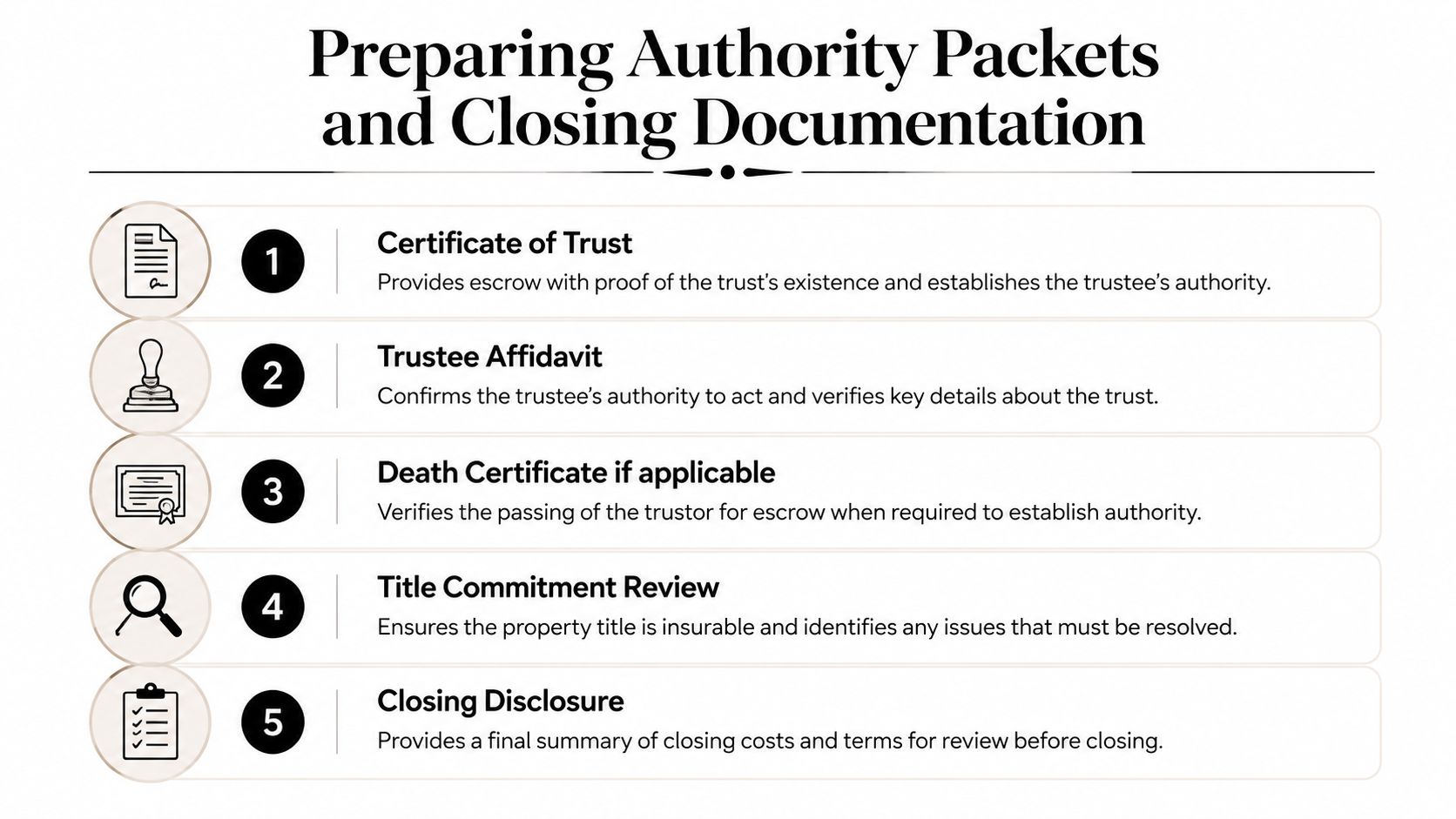
The packet should tell a consistent story. It should show who owns the property, who is serving as trustee, what powers the trustee has, and why the person signing the contract and deed can convey the property.
Assemble the file before accepting an offer
Start with the documents the title company is most likely to review:
- Trust instrument and amendments: Provide the operative trust terms or a certification that accurately summarizes them.
- Proof of trustee appointment: Include evidence that the successor trustee is serving after a death, resignation, incapacity, or other triggering event.
- Authority evidence: Identify the provisions allowing the trustee to manage and convey real estate.
- Property records: Gather the recorded deed, tax information, insurance records, mortgage details, and known lien information.
- Identity and execution materials: Be ready to provide identification, affidavits, certifications, and signature forms requested by escrow.
The title company may ask for the complete trust or may accept a certification of trust, depending on underwriting requirements and the transaction. Don't assume that a certification will cure a contradiction between the deed, trust documents, and successor trustee records.
A trustee should contact title before listing or, at least, immediately after deciding to sell. Early review can identify missing amendments, unclear trustee succession, co-trustee signature requirements, or a title vesting problem while there is still time to correct the file.
Sign the deed in a representative capacity
The closing deed must match the title company's requirements and the ownership record. A trustee generally signs in the trustee's representative capacity, not as though the trustee personally owns the property. The precise vesting and deed language should come from the title company and legal counsel because the trust name, trustee name, and recorded deed may require careful coordination.
A trustee deed isn't just a standard warranty deed with a different title. The form and warranties can affect the buyer's expectations, the title policy, and the trustee's risk. The trustee should never improvise deed language or sign a document that describes personal ownership when the property belongs to the trust.
Out-of-state families need an additional review when authority comes through a foreign will. Texas Estates Code § 505.052 provides that, when a foreign will gives an executor or trustee power to sell Texas property, a Texas court order isn't necessary to authorize the sale and execute the deed, provided the foreign will is properly recorded and its instructions are followed. Texas Estates Code § 505.052 is especially relevant when a family assumes Texas probate approval is always required.
Coordinate the professionals
The trustee, title officer, real estate agent, lawyer, and tax adviser each handle a different risk. The agent can help with marketing and offers. The title company determines what it can insure. A Texas trust administration lawyer can interpret authority and fiduciary issues. A CPA can evaluate the tax treatment before proceeds are distributed.
This short video may also help families understand the practical setting in which trust and estate documents are reviewed:
For background on ownership records and moving real property into trust ownership, review how to transfer property to a trust. The point isn't to create a larger file than necessary. It's to give title a coherent, reviewable record before closing becomes urgent.
Navigating Tax Implications and Beneficiary Distributions
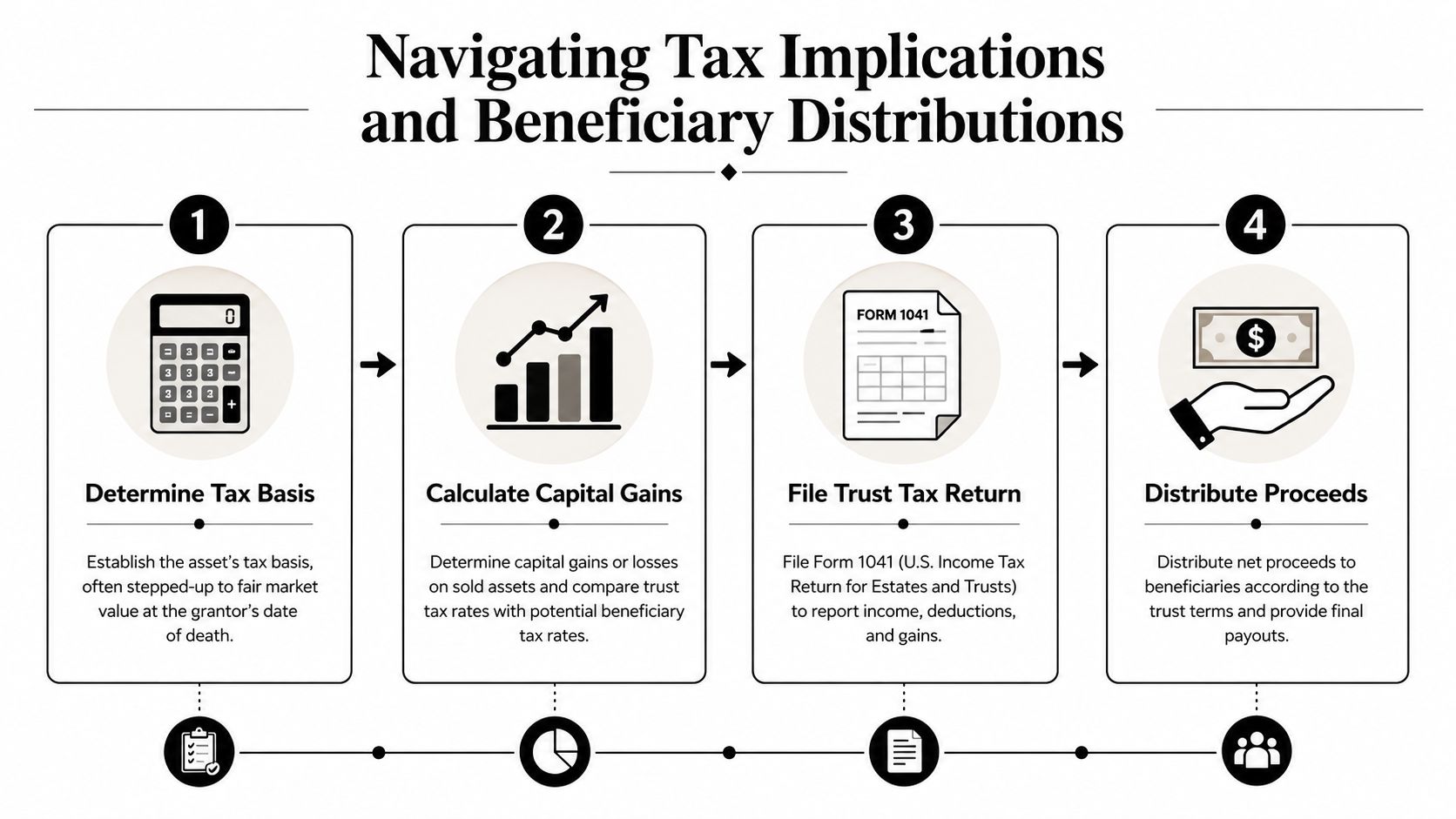
The closing statement doesn't end the trustee's work. Sale proceeds remain subject to the trust's terms, administration expenses, tax obligations, accounting duties, and beneficiary rights. A trustee should avoid promising an immediate payout until the tax and accounting picture is clear.
Determine the tax picture before closing
Capital gains analysis depends on the property's tax basis, holding period, trust structure, ownership history, improvements, debt, and the circumstances surrounding the sale. The trustee should ask a CPA to determine whether the trust, the estate, the grantor, or beneficiaries will report the gain and what records support the calculation.
A sale after a death may involve a different basis analysis than a lifetime sale. The trustee should gather prior purchase records, improvement receipts, depreciation information for investment property, and documentation connected to the property's transfer. This discussion of step-up in basis for trust assets in Texas explains why the basis question deserves attention before the trustee commits to a distribution.
An investment property may also raise the possibility of a 1031 exchange, but that option is technical and requires advance planning, qualified intermediary involvement, replacement-property decisions, and strict federal timing rules. A trustee shouldn't sell first and investigate exchange treatment later. The CPA and real estate advisers need to review eligibility before the contract and closing structure are finalized.
Account for the money carefully
After closing, preserve a complete record of:
- Gross sale proceeds: Keep the closing statement and settlement breakdown.
- Transaction expenses: Document commissions, repairs, taxes, insurance, legal fees, and other approved charges.
- Debt and liens: Confirm that mortgages, judgments, and property obligations were handled correctly.
- Tax reserves: Set aside amounts advised by the CPA until reporting obligations are resolved.
- Distributions: Record the authority, date, amount, recipient, and supporting calculation for each payment.
Beneficiaries may ask why the amount distributed differs from the contract price. A written accounting can show the deductions and explain why reserves remain in trust. The trustee should communicate factual updates without disclosing more than the trust or law requires, and should avoid using personal funds or commingling trust money.
Court approval may be appropriate when the trust document is unclear, beneficiaries dispute the proposed distribution, a conflict exists, or the trustee needs protection from a contested transaction. Court involvement isn't automatically required for every sale, but a trustee shouldn't treat it as a failure when the circumstances call for formal direction.
Avoiding Common Pitfalls in Texas Trust Property Sales
Many trust sale disputes begin with a reasonable assumption. The trustee assumes family members will agree, the buyer assumes title can solve missing documents, or the trustee assumes a fair price is obvious. Those assumptions can become expensive when the record doesn't show authority, neutrality, or a rational sale process.
The red flags that deserve attention
A relative wants to buy the property. Even if the proposed price appears attractive, a family buyer creates a conflict concern under Texas Property Code § 113.053. The trustee should obtain legal advice before negotiating, document value independently, and determine whether an exception or court process applies.
The trustee has no valuation file. A beneficiary may later claim that the property was sold too cheaply. A comparative market analysis, appraisal, listing history, repair estimate, or written offer analysis can show how the trustee evaluated value. The trustee doesn't need to guarantee the highest possible price, but should make an informed and defensible decision.
The beneficiaries hear about the sale from someone else. Notice and consent aren't always identical, but silence can fuel suspicion. Tell beneficiaries what the trust requires, explain the proposed strategy, preserve relevant communications, and avoid promising a distribution before expenses and taxes are known.
Title sees the documents for the first time at closing. Missing amendments, a death certificate, unclear succession, or inconsistent vesting can stop a transaction. Send the authority packet for review early and respond to title questions in writing.
Personal and trust funds are mixed. Commingling makes accounting harder and can expose the trustee to claims. Deposit proceeds into an account maintained for the trust, preserve statements, and authorize distributions through a documented process.
A short decision test
Before accepting an offer, ask:
- Is the sale authorized by the trust and consistent with any restrictions?
- Does the proposed buyer create a conflict?
- Can the trustee explain why the marketing and price are reasonable?
- Has the title company reviewed the authority packet?
- Have tax and distribution consequences been discussed with the appropriate advisers?
A trustee's strongest protection is not confidence that no one will object. It's a record showing that the trustee acted carefully, loyally, and for the trust's purposes.
Seek counsel before signing when co-trustees disagree, the trust is missing or ambiguous, a beneficiary threatens litigation, the buyer is connected to the trustee, or the title company refuses to insure the transfer. A Texas estate planning attorney may also need to review the family's broader plan if the sale affects future distributions, asset protection, probate, or guardianship concerns.
Securing Trusted Legal Guidance for Your Trust Sale
Texas law gives trustees meaningful authority to sell trust-owned real estate, including flexibility to use a private sale or public auction under the statutory framework. That authority doesn't excuse the trustee from reviewing the trust, avoiding prohibited conflicts, documenting value, communicating appropriately, preparing title materials, and accounting for proceeds.
Every trust is different. The right process may depend on whether the property is part of ordinary trust administration, connected to a foreign will, subject to co-trustee disagreement, or entangled with a beneficiary dispute. Early legal review can help you identify the correct path before a buyer, title company, or family conflict creates pressure.
If you're managing a trust or planning your estate, contact The Law Office of Bryan Fagan, PLLC for a free consultation. Our attorneys provide trusted, Texas-based guidance for every step of the process.
The Law Office of Bryan Fagan, PLLC offers practical counsel on trustee authority, authority packets, beneficiary communication, fiduciary accounting, tax planning coordination, and trust-related disputes. Visit Law Office of Bryan Fagan, PLLC to schedule a free consultation and discuss the specific Texas property sale and trust documents involved.