 Skip to content
Managing a loved one's trust can feel overwhelming, especially when grief and paperwork arrive in the same week. An adult child may be sitting at a kitchen table in Houston or San Antonio, coffee going cold, holding the trust document found in a parent's drawer and wondering who has authority to act.
If the trust was revocable during the parent's lifetime, the death usually triggers a known legal transition. The settlor's power to amend or revoke ends, and the successor trustee takes over under the trust's written terms. California law and federal IRS guidance reflect this general transition, while Virginia and North Carolina laws show how death can also begin time-limited procedures for trust administration and contests. California Probate Code information provides one example of this structure, and IRS guidance on revocable trusts that wind up addresses the federal tax change.
The immediate questions are practical. Who runs the trust now? Can beneficiaries be changed? What must the trustee do first? Texas families can approach those questions step by step, using the trust document, the Texas Trust Code, fiduciary principles, and professional advice as a roadmap.
When a Loved One Passes and the Trust Changes
During life, a revocable trust is usually flexible because the settlor keeps the power to change the document, remove property, add property, or revoke the arrangement. The settlor may also serve as trustee, which means the family sees little day-to-day difference between personal ownership and trust administration.
Death changes that relationship. The trust doesn't disappear, and the document doesn't become a suggestion. Instead, the successor trustee begins administering the trust under the terms that apply at the settlor's death. The legal power that made the trust revocable has ended.
The three questions families ask first
Who runs the trust? The successor trustee named in the document generally steps into the role after the acting trustee's death or incapacity, subject to the trust's appointment and acceptance provisions. If the document names co-trustees, alternate trustees, or a professional fiduciary, those provisions matter.
Can beneficiaries be changed? Usually, the successor trustee can't rewrite the settlor's estate plan just because administration has begun. The trustee must follow the controlling document, not personal preferences or family pressure.
What must happen first? The trustee should locate the original trust and related documents, obtain death certificates, secure trust property, identify beneficiaries, and preserve records. Early organization helps protect the trustee from allegations of delay, favoritism, or misuse of property.
Practical rule: The trustee's first job isn't to distribute everything quickly. It's to preserve the trust property and understand the governing instructions before making irreversible decisions.
Texas law places trustees in a fiduciary role. That means the trustee must act for the beneficiaries' interests, follow the trust terms, use reasonable care, and avoid conflicts. A Texas trust administration lawyer can help the family turn a confusing packet of documents into a manageable plan for the first weeks of administration.
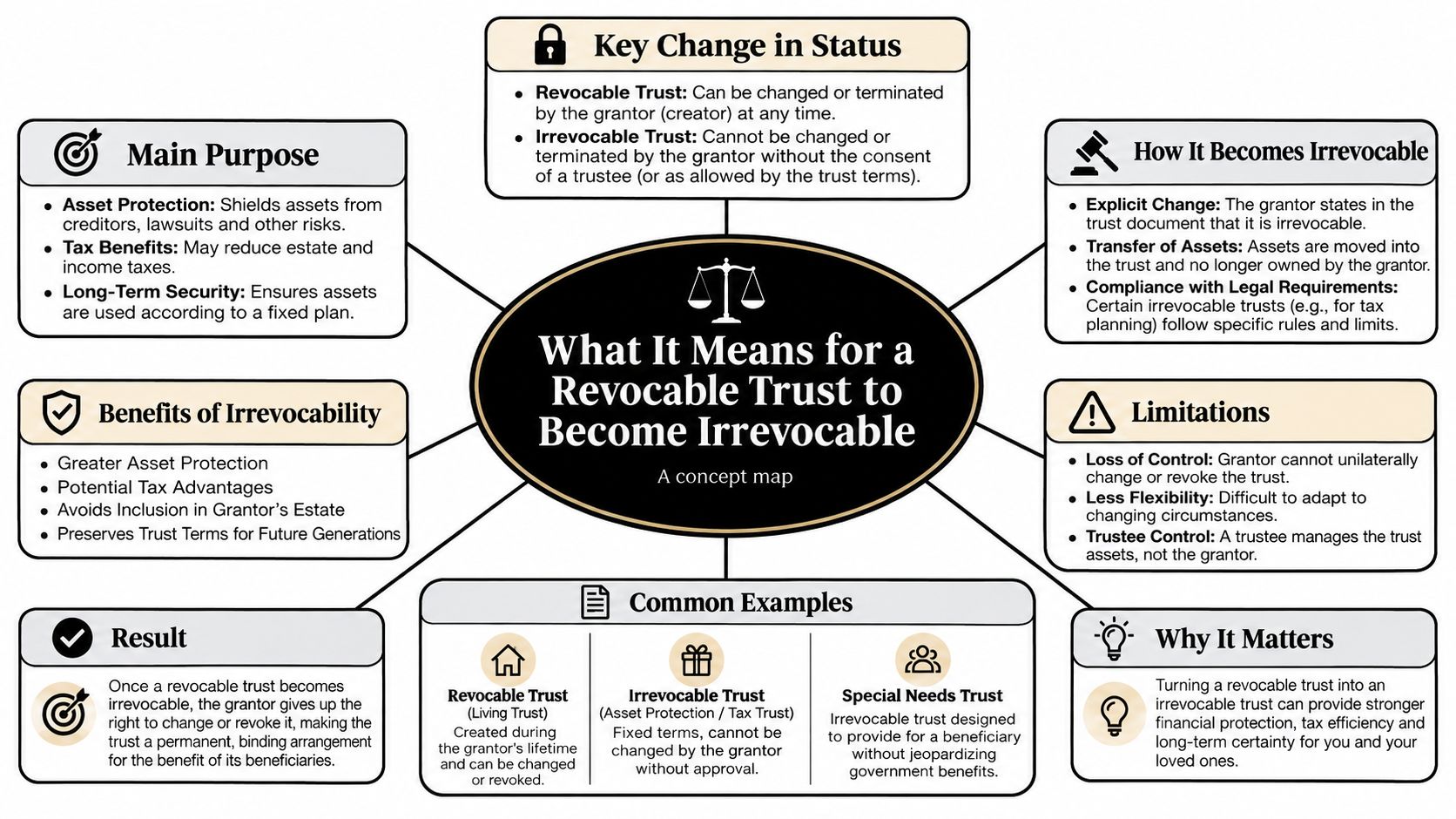
What It Means for a Revocable Trust to Become Irrevocable
Think of the trust like a car. While the settlor is alive and holds the power to revoke, the settlor has the keys. They can repaint the car, change its registration, or decide not to use it. When the settlor dies, the keys pass to the successor trustee, but the trustee can't redesign the car. The trustee must operate it according to the instructions already in place.
In plain English, irrevocable means the settlor can no longer amend or revoke the trust. It doesn't mean the trust is untouchable forever. Depending on the document and circumstances, the Texas Trust Code may allow tools such as trustee action, beneficiary agreement, decanting, or court-approved modification. Those tools have requirements, and a trustee shouldn't assume that a family agreement alone changes the trust.
What locks in at death
The settlor's death typically fixes the trust terms that control administration. The successor trustee then identifies the property, pays proper expenses, gives required notices, and distributes or continues holding assets as the document directs.
Beneficiaries don't automatically lose protection when the trust becomes irrevocable. Their rights may become more enforceable because they now have equitable interests under a fixed trust arrangement. The trustee's fiduciary duties also become central, including impartial administration, proper recordkeeping, and reasonable communication.
The trust itself continues as a separate legal arrangement. It may hold a home, financial accounts, business interests, or other property after the settlor's death. The successor trustee manages that property until the trust terms permit distribution or require the creation of continuing subtrusts.
The Legal Mechanics of the Transition in Texas
A Texas settlor dies on a Tuesday, and the trust does not wait for a court hearing to change status. The trust document usually supplies the handoff: it names the successor trustee and states when that person may begin acting. Read the provisions on death, incapacity, resignation, acceptance, notices, distributions, and trustee powers before taking control of property.
The appointment still deserves careful checking. A successor trustee may accept by signing an acceptance, by beginning to act, or through a certificate if the trust permits that method. Before signing documents or transferring assets, confirm the exact appointment language and whether another person has priority. A family member's understanding is not a substitute for the written trust.
A practical timeline
During the first days, obtain reliable proof of death and review the complete trust. Then identify and protect trust property, gather records, note known liabilities, and communicate with the appropriate beneficiaries. As administration develops, apply the fixed terms to specific gifts, residuary property, and any continuing trusts.
The transition works like changing the operating instructions for a business. The successor trustee does not rewrite the plan. The trustee carries out the plan under the trust's terms and applicable Texas law, including fiduciary principles in Texas Property Code Chapter 113. Keep a written record of decisions, supporting documents, and questions that require legal advice. Ambiguous language should be addressed carefully rather than resolved through a personal assumption.
Funded trust assets generally pass outside probate because the trust, rather than the decedent's probate estate, owns them. The result depends on proper title and funding. An account or parcel still titled in the decedent's name may require probate, including a proceeding connected with a pour-over will or another Texas Estates Code procedure. For a general explanation of that process, families can review the Cremation.Green probate overview.
The first 90 days are a handoff period, not a race to distribute everything. A focused checklist is available in First Steps for a Successor Trustee in Texas.
| Attribute | While Settlor Was Alive | After Settlor's Death |
|---|---|---|
| Control | The settlor may retain the power to amend or revoke. | The successor trustee follows the terms fixed at death. |
| Trustee role | The settlor may serve as trustee. | The named successor trustee administers the trust. |
| Beneficiary changes | Changes may be permitted under the document. | Changes generally require authority under the document or law. |
| Administration | The trust may use the settlor's tax reporting structure. | Separate post-death administration and tax reporting may be required. |
Successor Trustee Duties Once the Trust Locks In
The first 90 days are a stabilization period. The trustee doesn't need to solve every issue immediately, but each early decision should protect the property, the beneficiaries, and the trustee's own record.
Read the complete trust agreement. Don't rely on a summary or a family member's memory. Identify distribution standards, powers, deadlines, trustee compensation provisions, successor appointments, and dispute procedures.
Secure and value trust assets. Change access controls where appropriate, protect real estate, gather account statements, and obtain reliable valuations. A trustee who distributes before understanding the property may create an avoidable shortage or unequal treatment.
Use a dedicated trust account. Keep trust money separate from personal funds. Commingling makes accounting difficult and can expose the trustee to claims that trust property was misused.
Notify beneficiaries and qualified beneficiaries. Texas Trust Code Chapter 113 contains notice and information principles that guide trustee communication. The trustee should identify who must receive notice and what information the document or law requires.
Obtain a new EIN when required. The tax identity usually changes after death, so the trustee should coordinate promptly with a CPA or tax professional.
Review the pour-over will. A will may direct property that wasn't transferred into the trust. That property may require a Texas probate proceeding under the Texas Estates Code.
Keep an administration file. Preserve statements, deeds, appraisals, receipts, notices, tax records, and written explanations for major decisions.
Avoid self-dealing. A trustee shouldn't buy trust property, favor one beneficiary, borrow trust funds, or use trust assets personally without clear authority and careful legal review.
Section 113.056 of the Texas Trust Code is associated with the prudent person standard. In everyday terms, the trustee should use the care and judgment a prudent person would use in managing another person's property, while following the trust's specific instructions.
A trustee also has a duty to keep beneficiaries reasonably informed. Clear updates don't require sharing every private thought, but beneficiaries should understand what property has been located, what remains unresolved, and why distribution may take time. See this detailed resource on successor trustee responsibilities in Texas.

Tax and EIN Changes After the Settlor Dies
During the settlor's life, a revocable trust is commonly treated as a grantor trust for federal income tax reporting. The settlor's Social Security number may be used for reporting trust income, so the family may never see a separate trust tax return.
After death, think of the trust as receiving a new mailbox. The property remains in the trust, but the tax correspondence and reporting identity may change. IRS guidance explains that certain revocable trusts become irrevocable when the decedent-grantor dies, which can require separate post-death trust administration. The IRS explanation of trusts that wind up is the relevant federal reference.
What the trustee should coordinate
The successor trustee should ask a CPA whether the trust needs a new EIN, whether a fiduciary income tax return on Form 1041 is required, and how income distributions affect beneficiary tax reporting. Beneficiaries receiving reportable trust income may need taxpayer identification information for the related reporting.
Estate tax questions are separate from ordinary trust income tax questions. The applicable federal rules can depend on the estate, the property, prior planning, and elections available to a surviving spouse. A trustee shouldn't assume that a trust becoming irrevocable automatically creates an estate tax bill or eliminates all tax obligations.
Texas doesn't impose a state inheritance tax or state estate tax. Property tax treatment can still require attention, particularly when ownership, exemptions, or property use changes. A trustee should coordinate with a Texas estate lawyer and an experienced CPA before selling property, distributing income-producing assets, or closing accounts.
For a Texas-focused discussion of reporting and administration, review trust taxation in Texas.
Administering and Distributing Trust Assets in Texas
Consider a Hill Country widow whose trust holds ranch land, ranch operating accounts, and mineral interests. Her successor trustee has to identify each asset, confirm ownership, preserve the ranch, and understand the document before promising the adult children a distribution date.
The trustee sends the required trustee report and notice of the trust's existence to the three adult children within 60 days, as directed by the family's administration plan. The trustee then pays final debts and last medical bills from trust property when properly authorized, obtains information about the mineral interests, and sells a non-productive oil royalty because the trust terms and fiduciary judgment support that decision.
Distribution follows the document
The trustee pays specific bequests before dividing the residuary when the trust requires that order. A specific gift might be a named parcel, account, or item. The residuary is what remains after authorized expenses, debts, taxes, and specific distributions are addressed.
Not every beneficiary should receive property outright. A trust may require a continuing subtrust for a minor beneficiary or a vulnerable adult. In that situation, the trustee continues managing the property under the relevant distribution standard instead of treating the beneficiary's share as immediately available cash.

Texas trust administration can use tools such as provisions allowing a trustee to serve without bond and non-judicial settlement approaches when the statute, document, and affected parties permit them. Those tools don't excuse notice, impartiality, or careful accounting.
Before assigning or selling unusual property, the trustee should obtain a defensible value and preserve the supporting records. A practical guide to valuing trust assets after death can help identify the questions to raise with an appraiser, broker, or CPA.
Clear communication can prevent a beneficiary from interpreting silence as concealment. When the trustee explains the inventory, outstanding bills, valuation process, and expected sequence of distributions, the family has a better chance of resolving concerns before they become a formal dispute.
Common Misconceptions About the Irrevocable Status
Myth one: The trust eliminates every need for probate. A trust can control property properly titled in the trust's name, but it doesn't automatically capture everything the settlor owned. An unfunded bank account, vehicle, or parcel may still require a Texas probate process, often with the pour-over will serving as a backup direction.
Myth two: Irrevocable means nobody can ever change anything. The settlor can no longer revoke or amend the trust personally, but Texas law and the trust document may provide limited routes for modification, decanting, agreement, or court involvement. Those routes depend on facts, notice, consent, and statutory requirements.
Myth three: The trust no longer owes taxes. The opposite assumption can create serious problems. After death, the trust may need a separate EIN, fiduciary income tax reporting, and beneficiary reporting for distributions that carry out income.
The trustee isn't the owner
A successor trustee has control for administration, not personal ownership. Trustee discretion must stay within the document's standards and fiduciary duties. A trustee can't distribute property just because one beneficiary is more persuasive or because the trustee believes a different plan would be fairer.
Beneficiaries also can't rewrite the trust because they dislike a provision. They may have rights to notice, information, accounting, or legal relief, but changing the terms requires a legally valid mechanism.

Accurate expectations matter because family conflict often begins with assumptions. One person expects immediate cash, another expects a house to remain in trust, and the trustee believes silence is safer. A written administration plan can replace those assumptions with documented decisions.
Practical Next Steps for Texas Families
A family doesn't need to understand every trust provision on the first day. It does need to preserve the documents, identify the decision-maker, and prevent avoidable mistakes.
Start with the original plan
Locate the original trust, amendments, certification of trust, pour-over will, deeds, account statements, insurance records, business documents, and digital access information. Confirm that the named successor trustee is the person prepared to act and check whether the document requires a formal acceptance.
Create an administration file
The trustee should keep a working inventory that identifies:
- Real property: Record the legal description, current title, insurance, taxes, leases, and maintenance needs.
- Financial accounts: Separate trust accounts from personal accounts and preserve statements showing balances near the date of death.
- Business and mineral interests: Gather operating agreements, ownership records, royalty statements, and valuation materials.
- Outstanding obligations: Track final bills, expenses, taxes, loans, and claims that may affect distributions.
Send required notices to beneficiaries and qualified beneficiaries after confirming the applicable Texas Trust Code requirements and the trust's own notice provisions. Beneficiaries should receive realistic information about what the trustee knows, what remains under review, and why a distribution may not occur immediately.
Coordinate legal and tax work
Open a separate trust checking account when appropriate, obtain the new EIN if required, and ask an experienced CPA about Form 1041 and beneficiary reporting. Address property that was never transferred into the trust by reviewing the pour-over will and determining whether a Texas Estates Code probate proceeding is needed.
A Texas trust administration lawyer can review ambiguous language, prepare notices, guide fiduciary accounting, and help resolve disagreements before they escalate. A Texas estate planning attorney can also help surviving family members update their own plans, including wills, trusts, guardianship documents, and asset protection strategies.
Beneficiaries should keep written questions and request information respectfully. Trustees should respond consistently and preserve copies of communications. The process contains many details, but it becomes manageable when each action has a clear purpose, a supporting document, and a record of who approved or completed it.
If you're managing a trust after a loved one's death, the Law Office of Bryan Fagan, PLLC offers Texas-focused guidance on successor trustee duties, tax coordination, beneficiary communication, probate issues, and trust disputes. Schedule a free consultation by visiting Law Office of Bryan Fagan, PLLC so your family can move through the transition with a clear, legally sound plan.


