Managing a loved one's trust can feel overwhelming, especially when you're the surviving spouse, the primary beneficiary, and the person responsible for protecting what remains for your children or other heirs. You may need income for housing and daily life while remainder beneficiaries want confidence that the trust property is being preserved. Marital trust administration in Texas gives you a legal framework for balancing those interests, but it also requires careful records, impartial decisions, and attention to the trust document.
The safest approach is to treat the trust like an ongoing legal responsibility, not a personal account. The Texas Trust Code, the Texas Estates Code, and fiduciary principles provide the rules, while a clear process helps reduce confusion and prevent disputes.
Understanding Marital Trusts and Trustee Duties Under Texas Law
After her husband's death, Maria learns that the family investment account and a rental property were placed in a marital trust. The trust lets her receive support during her lifetime, but the remaining property will pass to her husband's children from an earlier marriage. Maria is both the lifetime beneficiary and the acting trustee. She can use trust assets under the document, but she can't treat them as her own unrestricted property.
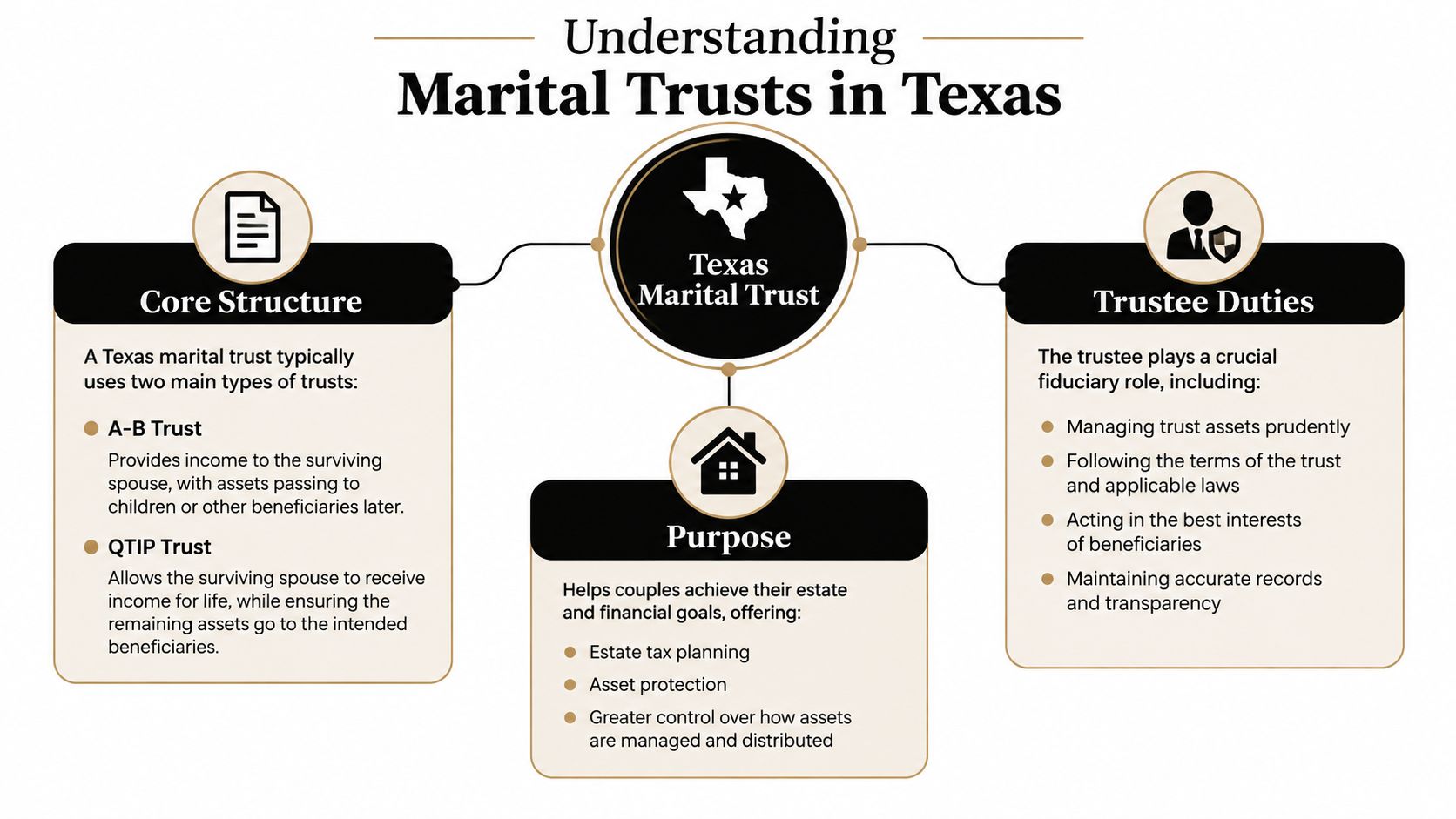
That situation is common in blended families. A marital trust can provide financial security for a surviving spouse while preserving a later inheritance for children or other remainder beneficiaries. Some plans use an A-B structure, while others use a QTIP arrangement. The exact structure depends on the trust language, ownership of the assets, family relationships, and tax planning goals. A plain-language overview of what a marital trust means in Texas can help families understand the basic structure before reviewing their own documents.
The Texas Trust Code supplies the operating rules
Texas trust administration is governed by the Texas Trust Code, which took effect on January 1, 1984. The Code applies to trusts created on or after that date and to related transactions, making 1984 an important milestone in modern Texas fiduciary law. It requires trustees to follow the trust's terms and, when the document doesn't provide a rule, to follow statutory default rules, including impartial treatment of beneficiaries. (Texas Trust Code reference)
The Texas Property Code also reflects a significant 2006 amendment addressing fiduciary administration and principal-and-income allocation. That matters because income may support the surviving spouse, while principal and future appreciation may affect remainder beneficiaries.
Why the spouse-trustee role requires care
A trustee owes duties of loyalty, prudence, recordkeeping, disclosure, and impartiality. The trustee must administer the trust fairly and reasonably for all beneficiaries unless the instrument clearly directs a different approach. Texas law also recognizes that a trustee may be a beneficiary, but that dual role creates a conflict that should be managed openly.
Practical rule: A distribution can support the surviving spouse and still require documentation showing why it was permitted, reasonable, and consistent with the trust terms.
The Texas Estates Code may also matter when assets remain outside the trust or when a court-supervised estate process affects administration. A Texas trust administration lawyer can help separate trust responsibilities from probate responsibilities and create a defensible process from the beginning.
Opening the Marital Trust Administration the Right Way
The first administration tasks shape everything that follows. A spouse-trustee should resist the urge to make informal payments or transfer property before understanding the trust's instructions, ownership records, and beneficiary rights.
Start with the governing documents
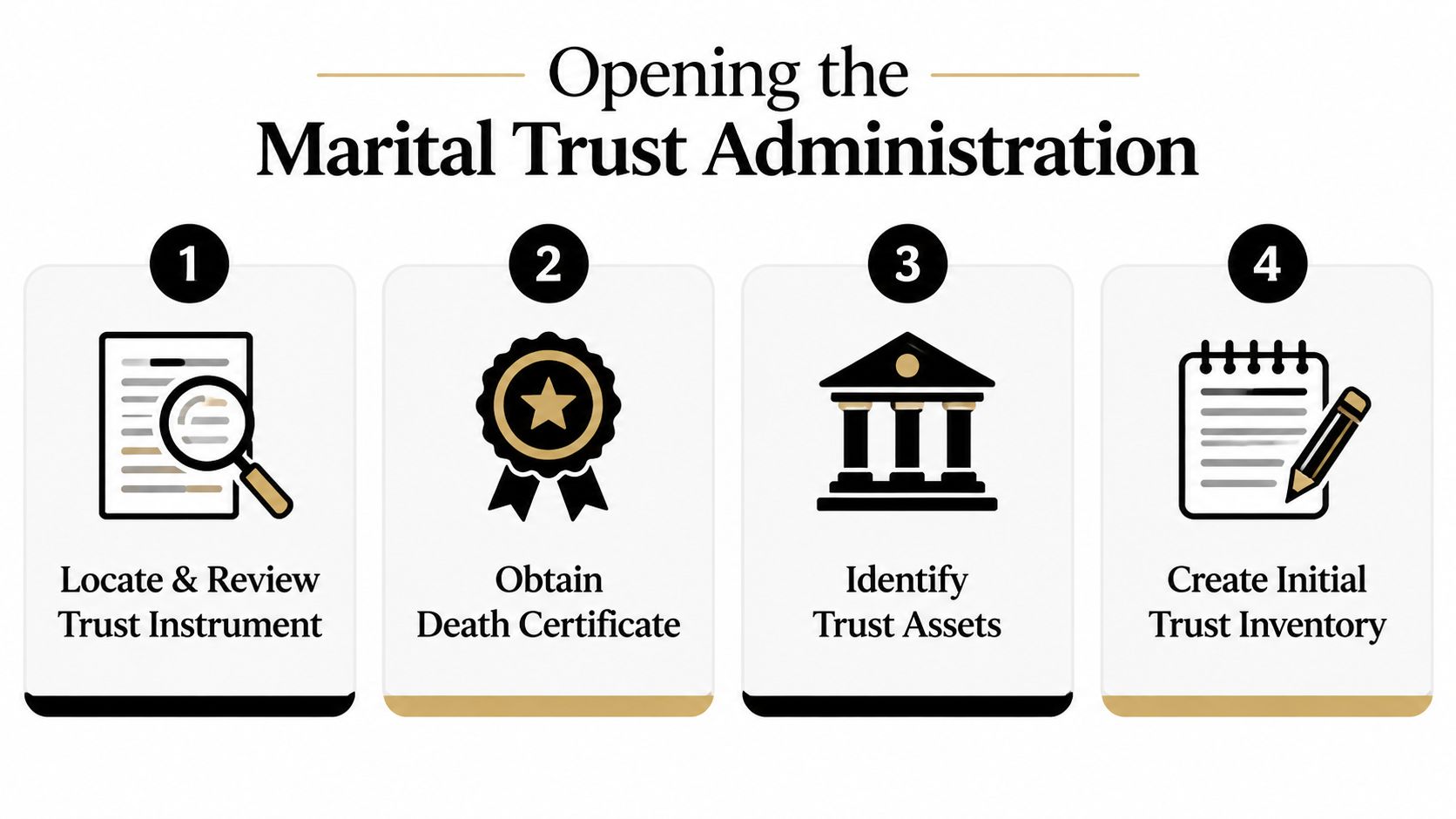
Collect the signed trust instrument, every amendment, related wills, beneficiary designations, deeds, account records, and any written trustee acceptance. Read the distribution provisions closely. Look for instructions about income, principal, housing, health expenses, trustee discretion, successor trustees, compensation, and reports.
Obtain certified copies of the death certificate and confirm the date of death. Financial institutions, insurance companies, title offices, and tax professionals may need this document before they release information or process a transfer.
Build the initial administration file
Create a secure file, whether digital or paper, with separate folders for:
- Trust authority: Keep the trust, amendments, acceptance, and legal correspondence together.
- Beneficiary information: Record current and remainder beneficiaries, addresses, and communication history.
- Asset records: Gather deeds, statements, insurance policies, business documents, and personal property records.
- Expenses and decisions: Save invoices, receipts, distribution requests, approvals, and explanations for discretionary decisions.
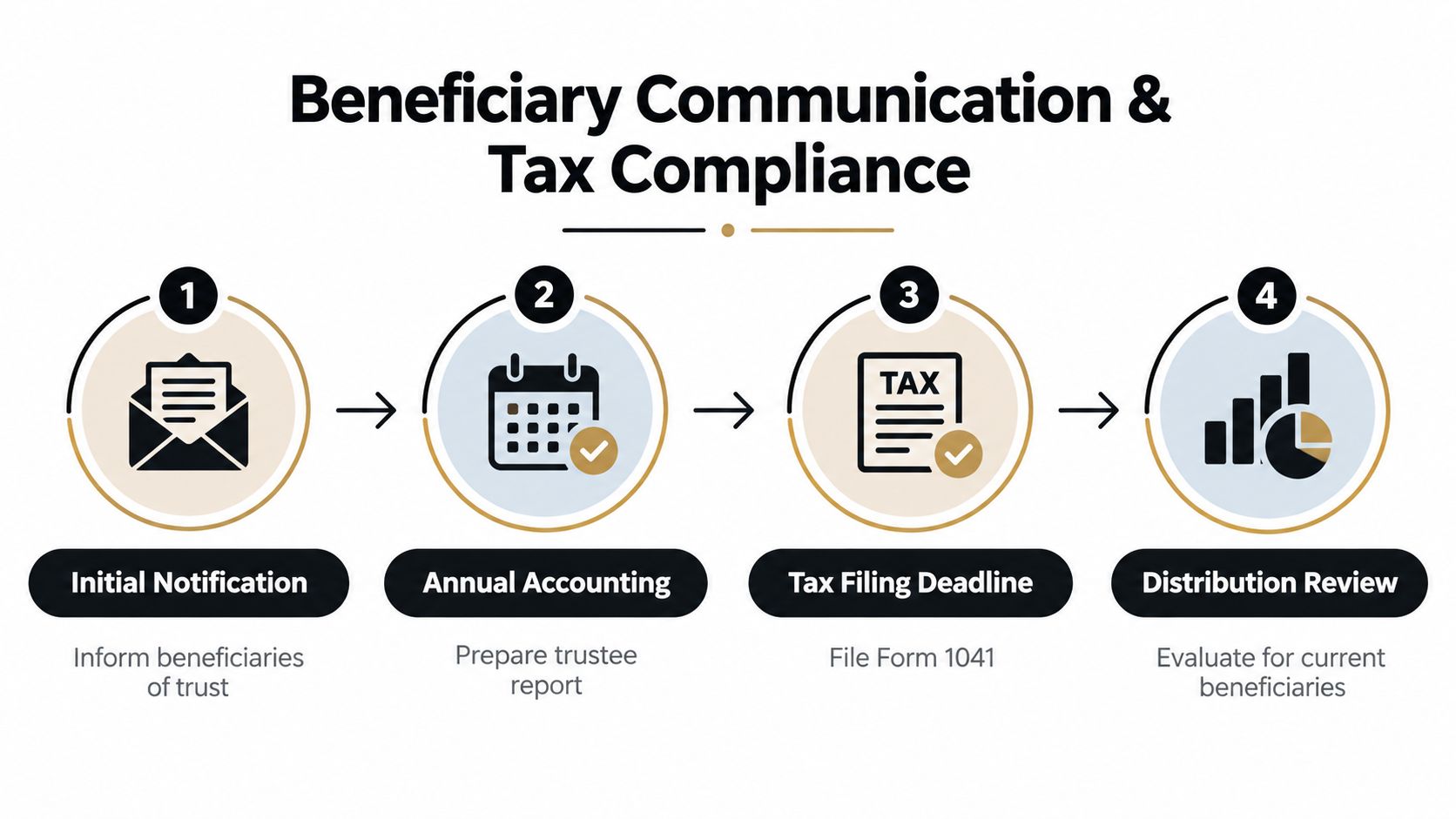
A successor trustee may need a federal tax identification number for the trust. A certified public accountant can help determine the correct tax filing requirements and timing. The trustee should also notify the people entitled to notice under the trust and applicable Texas law, rather than relying on family conversations.
For a focused checklist on what to do immediately after accepting the role, see First Steps for a Successor Trustee in Texas.
Protect property before making distributions
Secure vacant real estate, review insurance coverage, preserve business records, and prevent unauthorized withdrawals from financial accounts. If the trust owns a home, document its condition and identify who pays utilities, repairs, taxes, and insurance.
Create a master calendar for notices, account statements, tax work, insurance renewals, investment reviews, and distribution decisions. A missed notice or unexplained payment can create suspicion even when the trustee acted with good intentions.
A clean opening file gives the trustee one place to show what the trust owned, who was notified, what decisions were made, and why each action followed the document.
Inventory Valuation and Prudent Asset Management in Texas
A trustee can't manage fairly without knowing what the trust owns and what each asset was worth when administration began. The inventory should identify title, ownership character, location, value, income, debt, insurance, and any restrictions affecting the property.
Begin by separating community property and separate property. Texas community property rules can affect whether an asset belonged to one spouse, both spouses, or the deceased spouse's trust. Review deeds, purchase records, account registrations, marital agreements, business documents, and prior estate planning records. Don't assume that a beneficiary designation or account title tells the whole story.

Establish reliable values
Real estate, closely held businesses, mineral interests, valuable personal property, and unusual investments may need professional valuation. Keep the appraisal date, method, supporting records, and appraiser's credentials in the trust file. Account statements may establish a value for marketable securities, but the trustee should still preserve the statement showing the relevant date.
Document cost basis and other tax information where available. This helps the trustee and tax adviser evaluate later sales, gains, losses, and reporting obligations. Missing basis records can make future tax work harder and can create disagreements about whether a sale was prudent.
Manage assets for both beneficiary classes
Texas fiduciary law requires careful administration of investments and fair treatment of beneficiaries. The surviving spouse may need dependable income, while remainder beneficiaries have an interest in preserving principal and long-term value. The trustee should review the trust's investment language, risk limits, liquidity needs, and principal-and-income provisions before changing the portfolio.
Consider a rental property. Paying necessary repairs may protect the property and support its income-producing purpose. Selling it to fund a personal expense may be permitted in some trusts, but the trustee should confirm the authority, evaluate alternatives, and record the reasoning.
A spouse-trustee should never use trust property for personal purposes without clear authority. Keep trust accounts separate from personal accounts, pay expenses from the correct account, and obtain independent advice before entering a transaction involving the trustee, a relative, or a business connected to the trustee.
Documentation principle: Record the decision, the trust provision supporting it, the information reviewed, the effect on each beneficiary group, and the reason the action was reasonable.
Beneficiary Communication Accounting and Tax Obligations
Communication is part of fiduciary administration, not a courtesy added after the important work is finished. A surviving spouse who receives current benefits may have different information needs from children who hold remainder interests, but both groups should receive the information Texas law and the trust require.
A current beneficiary generally has a present right to receive distributions or other benefits. A remainder beneficiary receives property later, often after the surviving spouse's death. The trustee should identify those roles and review the trust before deciding what information to provide. The document may expand or limit certain rights, but the trustee shouldn't assume that silence eliminates the duty to keep qualified beneficiaries reasonably informed.
Treat accounting as a recurring duty
Texas requires trustees to maintain accurate records and keep beneficiaries reasonably informed. Fiduciary accounting should show beginning assets, income, expenses, distributions, gains, losses, fees, and ending balances. The trustee should also explain significant transactions in plain language.
Under Texas Property Code section 113.151, a beneficiary may make a written demand for a trust accounting. The accounting generally covers transactions since the last accounting or since the trust began, whichever is later, and the trustee generally can't be compelled to account more often than once every 12 months unless a court orders otherwise. (Texas accounting demand rules)
That limit doesn't mean a trustee should ignore reasonable questions between formal accountings. Prompt, organized responses often prevent a minor concern from becoming a formal dispute.
Coordinate tax work with professionals
A trust may need a federal fiduciary income tax return, commonly associated with Form 1041, depending on its income and filing obligations. The trustee should provide the CPA with account statements, investment activity, distribution records, expense receipts, property transactions, and valuation information.
Estate tax considerations may also affect funding, elections, basis, and future planning. Texas has no state estate tax, but Texas property, probate, income, and federal tax issues can still overlap. A Texas estate planning attorney and CPA should coordinate rather than treating tax filing as an isolated bookkeeping task.
The trustee should maintain a communication log with dates, recipients, topics, documents provided, and follow-up items. The trust tax return Form 1041 resource can help identify questions to raise with a tax professional.
Distributions Compensation Modification and Termination Decisions
Distributions create the most visible tension in many marital trusts. The surviving spouse may need money for medical care, housing, education, maintenance, or support. Remainder beneficiaries may worry that repeated principal distributions will reduce what they eventually receive. The trustee's task is to apply the trust standard, not to satisfy whichever family member is most persuasive.
Use the trust standard, not informal promises
Read the distribution clause word for word. A trust that allows distributions for health, education, maintenance, and support requires a decision tied to those purposes. A purely discretionary clause may give the trustee broader judgment, but it still doesn't eliminate loyalty, prudence, impartiality, or recordkeeping duties.
For every significant distribution, keep a written explanation:
- Authority: Identify the trust provision that permits the payment.
- Need: Describe the expense or purpose without disclosing unnecessary private details.
- Alternatives: Note whether insurance, income, or other resources were considered when relevant.
- Impact: Explain how the payment affects current and remainder beneficiaries.
- Approval: Preserve invoices, statements, professional advice, and the trustee's decision.
Handle compensation carefully
A trustee may be entitled to reasonable compensation under the trust instrument or Texas law. The amount and method should be clear, supported by records, and separated from reimbursement for legitimate trust expenses. A trustee who is also the surviving spouse should be especially careful because personal compensation can look like self-dealing to remainder beneficiaries.
Review the trust's fee language before charging anything. For guidance on documenting and evaluating trustee fees, see trustee compensation in Texas.
Decide whether court involvement is appropriate
Texas Property Code section 112.054 allows a trustee or beneficiary to petition for modification, reformation, or termination when statutory grounds exist. A court may direct an act the trust forbids or prohibit an act the trust requires if the legal requirements are met. (Texas trust modification statute)
Texas Estates Code section 1301.201 gives a court authority to modify or revoke a management trust before its termination date. (Texas Estates Code management trust authority)
| Situation | Safer first response |
|---|---|
| The trust still fits the family's needs | Continue administration and document decisions |
| A provision is unclear | Seek legal interpretation before acting |
| Changed circumstances affect administration | Evaluate modification or court relief |
| Beneficiaries disagree about a major action | Consider mediation or court guidance |
| The trust no longer serves its purpose | Analyze termination under the document and statute |
Court supervision isn't a failure. It can provide direction when the document, family circumstances, or beneficiary interests no longer align.
Avoiding Common Pitfalls and Knowing When to Consult a Texas Attorney
Most trustee problems begin with ordinary shortcuts. The spouse-trustee uses a personal account temporarily, delays an accounting, pays a family expense without recording the reason, or assumes that being the surviving spouse eliminates scrutiny. Those choices can expose the trustee to claims for an accounting, fee review, or surcharge in a Texas district court.
Use this self-audit before making a major decision:
- Separate funds: Are trust accounts clearly separate from personal accounts?
- Follow the document: Can you identify the provision supporting each distribution?
- Preserve records: Do statements, receipts, valuations, and messages support the administration?
- Communicate fairly: Have you responded to beneficiary requests and provided required information?
- Review conflicts: Would an independent person understand why the decision benefited the trust?
- Get advice early: Have you consulted counsel before a contested transaction or threatened claim?
Contact a Texas trust administration lawyer when a beneficiary demands a formal accounting, challenges trustee compensation, disputes a distribution, questions asset ownership, or asks to modify or terminate the trust. Legal advice also makes sense when the surviving spouse becomes incapacitated, when a business or real estate holding is difficult to value, or when the trust owns property outside Texas.
The Law Office of Bryan Fagan, PLLC handles trust creation, administration, fiduciary accounting, modification, termination, probate-related disputes, estate planning, guardianship planning, and asset protection matters for Texas families and fiduciaries. If you're managing a marital trust or planning your estate, visit Law Office of Bryan Fagan, PLLC to schedule a free consultation and discuss a practical plan for protecting the surviving spouse while respecting remainder beneficiaries.