Managing a loved one's trust can feel overwhelming, especially when you're the person everyone expects to have answers before you've even had time to process the loss. A trustee's first look at the papers, deeds, account statements, and tax records often raises the same question: what is everything worth, and what am I supposed to do with that number?
In Texas, that question is tied to fiduciary duties, not guesswork. A trustee who gets valuation wrong can upset beneficiary shares, create tax problems, and invite avoidable conflict. A careful approach to how to value trust assets after death protects the trust, supports the accounting, and gives the trustee a defensible record if anyone later challenges the administration. If you're still in the early stages of settling a trust, this practical guide from how to settle a trust after death in Texas can help frame the bigger process.
When a Trustee First Faces the Valuation Question
The first week after the settlor's death usually doesn't feel orderly. A sibling named as trustee walks into a home office and finds brokerage confirmations, old deeds, property tax notices, and bank mail stacked in separate piles. Nothing is labeled the way a trustee wishes it would be, and the next question is always the same, what value belongs on the trust inventory?
That first valuation isn't just bookkeeping. In Texas trust administration, the trustee has to act like a fiduciary from the start, which means the number on the inventory can affect beneficiary expectations, tax reporting, and the trustee's own exposure if the work is sloppy. A number pulled from memory or from an online guess is usually worse than no number at all.
Why the first valuation choice matters
The starting point is usually the date of death. That's the baseline that supports the inventory, the accountings, and the later distribution decisions. If the trust holds marketable assets, the trustee still has to document the value carefully, and if the property is not readily traded, the trustee may need outside support to justify the figure.
A trustee who handles this well is not being overly cautious. The trustee is building a file that can survive beneficiary questions, tax review, and the ordinary reality that family members remember numbers differently after grief enters the room. Texas courts care less about how fast the trustee moved than whether the trustee acted with care, neutrality, and records that make sense.
For a Texas trustee, that means one habit matters more than speed, write down the source of every value as soon as it's chosen.
Trustee Duties Under the Texas Trust Code
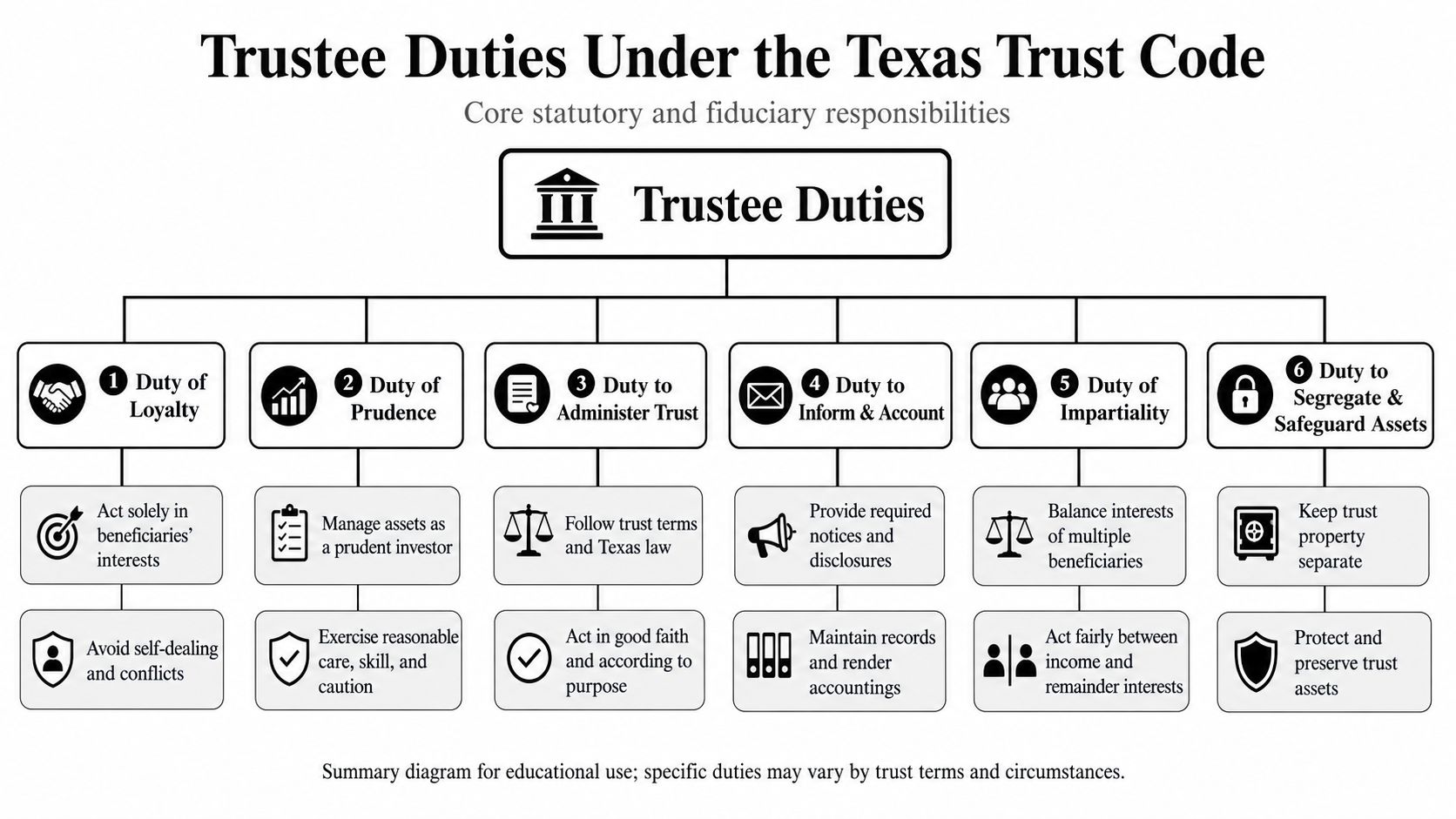
A trustee doesn't get to choose whether valuation feels important. Under Texas fiduciary principles, it is part of the job. Loyalty, prudence, impartiality, recordkeeping, and beneficiary communication all show up in the valuation process, because each number can change what someone receives and whether the trustee can defend the administration later.
What the duty really means in practice
Duty of loyalty. The trustee can't use valuation to favor one beneficiary over another. If one asset is difficult to price, the trustee needs a method that is consistent, not one that conveniently helps the side the trustee hears from most often.
Duty of care. Care means selecting a reasonable method for the asset type, then supporting it with documents. That can include brokerage statements, bank records, appraisals, or historical account data. A trustee who just “takes a guess” has likely drifted outside prudent administration.
Duty to keep records. Many disputes start and end here. The trustee should be able to show what was valued, when it was valued, and why that method was used. That record should also support later tax filings and the final accounting. Texas trustees often need to think about A Trustee's Duty to Account to Beneficiaries, because valuation and accounting are tightly connected.
Duty to act in beneficiaries' best interests. That doesn't mean every beneficiary will like the number. It means the trustee picked a defensible number based on evidence, not convenience.
The Texas Estates Code matters too when the trustee also serves as executor, because the same family may have both roles in play. The overlap is practical. One person may be handling trust assets and probate assets at the same time, and both roles demand clear records, consistent methodology, and a calm paper trail.
A trustee who can explain the valuation in one paragraph, with supporting documents attached, is usually in a much stronger position than one who can only say the number “felt right.”
For more on the fiduciary side of that job, the page on The Fiduciary Duties of a Texas Trustee fits naturally with this part of the process.
Building a Complete Inventory of Trust Property
A valuation is only as good as the inventory behind it. If the trustee misses an account, overlooks a mineral interest, or assumes a retirement plan is trust property when it isn't, the rest of the administration starts on the wrong foot. The work begins by identifying what the trust owns directly, what passes into the trust through beneficiary designations, and what sits outside the trust but still affects the family's overall administration.
A good inventory usually starts with statements and titles, not memory. Bank records, brokerage statements, real property deeds, insurance forms, business records, and mineral paperwork all need a place in the file. Held outside the trust? That doesn't always mean irrelevant. A retirement account, for example, may pass by beneficiary designation, but it can still matter when the family is tracking the overall estate picture and coordinating tax or distribution decisions.
Where trust property tends to hide
In Texas, assets often show up in places the family didn't expect. A brokerage account may be titled in the settlor's name alone. A family ranch may have separate mineral interests attached to it. A small business interest may sit in old membership paperwork rather than in a modern online portal. Digital assets can be easy to miss because no paper statement arrives in the mail.
The trustee should make a working list first, then verify each item against a document. Once the list is complete, the trustee can move asset by asset into the right valuation method. That's where a master inventory becomes more than a spreadsheet, it becomes the backbone of the trust file.
Practical rule: if the trustee can't prove the asset was identified, the trustee probably can't defend the value either.
| Common Asset Categories and Where to Find Them | Where to Look | Supporting Document |
|---|---|---|
| Bank accounts | Bank statements, online banking, tax files | Date-of-death statement |
| Brokerage accounts | Custodian records, monthly statements | Holding statement, trade history |
| Real estate | Deeds, county records, loan files | Appraisal, tax appraisal records |
| Mineral interests | Division orders, lease files, old conveyances | Title documents, ownership records |
| Business interests | Operating agreement, stock ledger, company files | Ownership records, appraisal |
| Personal property | Home inventory, insurance schedules, photographs | Item list, resale support |
For a deeper look at the recordkeeping side, what is trust accounting is a helpful related resource.
Choosing the Right Valuation Method for Each Asset
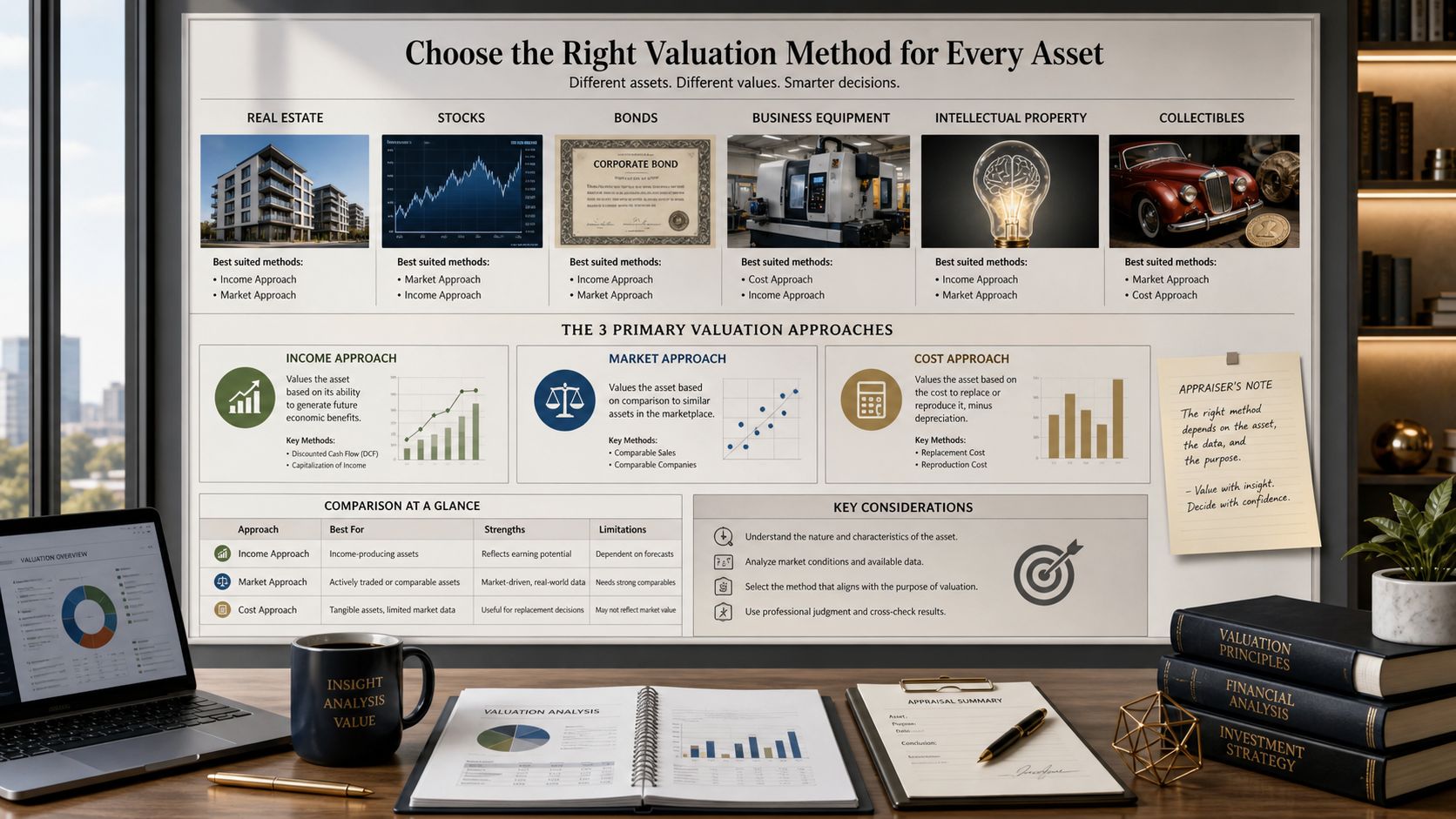
Not every asset gets the same treatment. Cash, public stock, a ranch, and a family business all need different methods, and the trustee's job is to match the method to the asset instead of forcing every item into one formula. That choice matters because beneficiaries can usually tell when a trustee used convenience instead of judgment.
For cash, the cleanest answer is often the balance shown on the bank statement as of the date of death. That works because cash doesn't move the way real estate or securities do, and the trustee can usually support the figure with the bank record itself. For publicly traded securities, practitioners commonly use the market value tied to the date of death, and if a stock doesn't have a direct closing value, one common method is the average of the high and low prices for that day. Many brokerage firms can provide that value directly, which helps keep the file consistent.
Market value, appraisal, and tax basis
A trustee usually has three practical tools. Market value works best for assets with reliable daily pricing. Independent appraisal fits real estate, closely held businesses, collectibles, and other non-public assets where the market doesn't speak clearly. Tax-basis valuation matters when the trustee is coordinating with tax reporting, because the same asset may need a supportable value for fiduciary records and a different number for tax reporting purposes.
Real property often calls for a qualified appraiser, especially if the family expects beneficiaries to question the number. Closely held business interests also tend to need appraisal support, because there's no public market to point to. If the property is industrial, commercial, or otherwise complex, resources like appraisal for Texas tax appeals can be useful context for understanding how professional appraisal work evaluates market evidence.
Practical rule: if an asset can't be priced from a reliable market quote, the trustee should think appraisal first, not last.
A useful way to think about the methods is this, the stronger the market data, the simpler the valuation. The weaker the market data, the more important the appraiser becomes. For a Texas trustee, the question isn't which method is cheapest, it's which method is defensible if a beneficiary asks for the backup.
The trustee's records should explain the choice in plain English. That explanation is often more valuable than the number itself.
Timing Rules That Shape Every Valuation
Time changes value, and trust administration has to respect that reality. The default baseline is still the date of death, but federal estate-tax rules also recognize an alternate valuation date in some estates, which can place certain assets at value 6 months after death if that choice lowers both the estate value and the estate tax liability. That timing choice is not just technical. It can change the tax picture and, in some situations, affect what beneficiaries ultimately receive.
The trustee should not pick a date casually. The file needs to show why the chosen date makes sense, which assets were affected, and whether the trustee had market data or appraisals that support the number. That becomes especially important when markets rise or fall sharply between death and distribution. A public stock portfolio or a real estate holding can look very different after a few months, and the trustee needs records that reflect the chosen valuation date, not just the one that was easiest to obtain.
What the trustee should document
The trustee should save the brokerage history, appraisal date, and any correspondence showing how the value was chosen. If a marketable security is involved, the trustee may need a quote for the date of death, or, if the death occurred on a non-trading day, a practical averaging method used by practitioners. If real property is involved, the appraisal date should be clear, because beneficiaries often focus on whether the report reflects the right moment in time.
The same timing logic matters in Texas fiduciary administration because a later accounting still has to reconcile earlier valuation choices. If the trustee can show a clean timeline, the valuation usually feels less arbitrary to everyone involved.
Timing is part of the fiduciary record. If the trustee can't explain why that date was used, the valuation is vulnerable.
The safest habit is simple, record the date, the method, and the source at the same time the value is entered. That habit prevents a lot of later arguments.
A Real-World Scenario Where Valuation Went Wrong
A Texas family trust held a rental house, a brokerage account, and some personal property. The trustee, who was also a family member, used a quick online estimate for the house because it seemed close enough and the beneficiaries were asking for progress. One beneficiary was paid out in cash based on that estimate, and the trustee moved on.
Months later, a formal appraisal came back higher. The beneficiary who had been cashed out argued that the trustee had undervalued the property and shortchanged that share. The trustee also had only casual text messages explaining the number, no written appraisal at the time of distribution, and no clear memo about why the online figure had been used.
That kind of mistake turns a routine administration into a dispute fast. The problem wasn't only the number. It was the combination of an informal method, poor documentation, and a distribution made before the trustee had enough support for the value. Once a family believes one person got less because the trustee guessed, the argument usually becomes about fairness, not just math.
What would have helped
A better approach would have been to get a qualified appraisal before any cash-out, use one consistent method for the home, and tell the beneficiaries in writing how the value was chosen. The trustee could also have kept the supporting records in the trust file, along with the statements used for the other assets.
Texas trust administration becomes more than theory at this stage. A trustee doesn't need perfection, but the trustee does need evidence. Every valuation can become a piece of proof in a later fiduciary claim, so the file should be built with that possibility in mind.
The lesson is plain. Small shortcuts often feel harmless in the moment, but they become expensive once a beneficiary asks for the backup.
Common Pitfalls and When to Bring in Professionals
The most common mistakes are usually not dramatic. They're the quiet ones, undervaluing collectibles, ignoring oil and mineral interests, relying on outdated brokerage statements, mixing personal money with trust money, and skipping formal appraisals for business interests. Each one creates uncertainty, and uncertainty is what fuels beneficiary objections.
A trustee should bring in a licensed appraiser when the asset has no reliable public market, when the property is unusual, or when beneficiaries are already questioning the number. A CPA becomes essential when tax reporting needs to line up with the trust records, especially if the file includes income, deductions, or estate-tax work. A Texas trust administration lawyer is worth involving when the trust is complex, the family is divided, or the trustee wants help protecting personal liability while making sure the file supports the Texas Trust Code and the Texas Estates Code.
The Law Office of Bryan Fagan, PLLC regularly helps fiduciaries handle trust administration, estate planning, probate, guardianship, and asset protection matters across Texas, and that can matter when valuation choices are already drawing attention. For some families, that support is the difference between a smooth accounting and a fight over one asset line item.
Signs professional help is overdue: beneficiaries are pushing back on values, the trust holds illiquid property, the asset list still feels incomplete, or the tax picture isn't lining up with the inventory.
Trust valuation is rarely just about numbers. It's about showing that the trustee acted carefully, kept records, and made choices that can stand up later. If you're trying to value trust assets after death and want help getting it right, contact a Texas trust administration lawyer before a small mistake turns into a larger dispute.
If you're managing a trust or planning your estate, contact The Law Office of Bryan Fagan, PLLC for a free consultation. Our attorneys provide trusted, Texas-based guidance for every step of the process.